
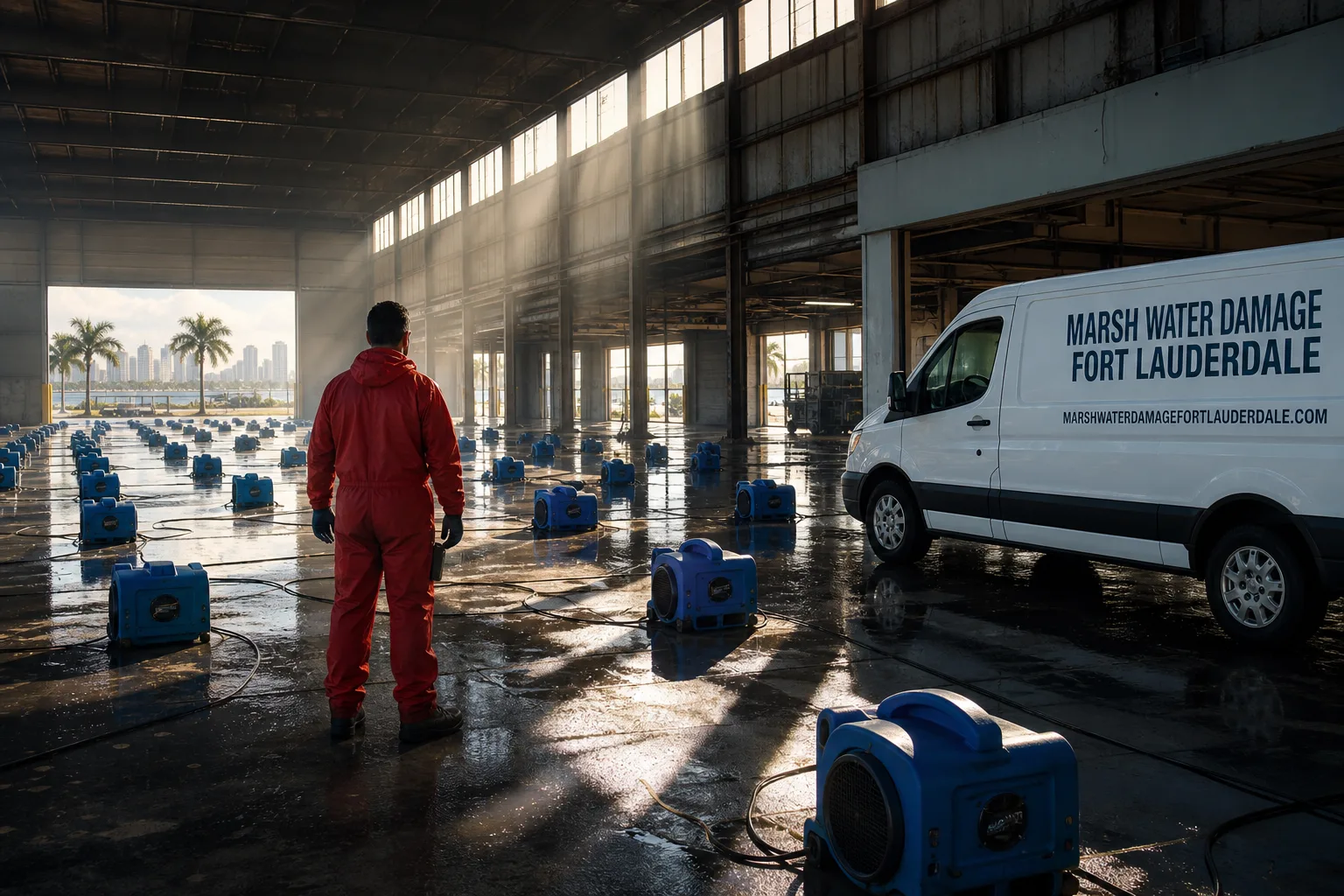
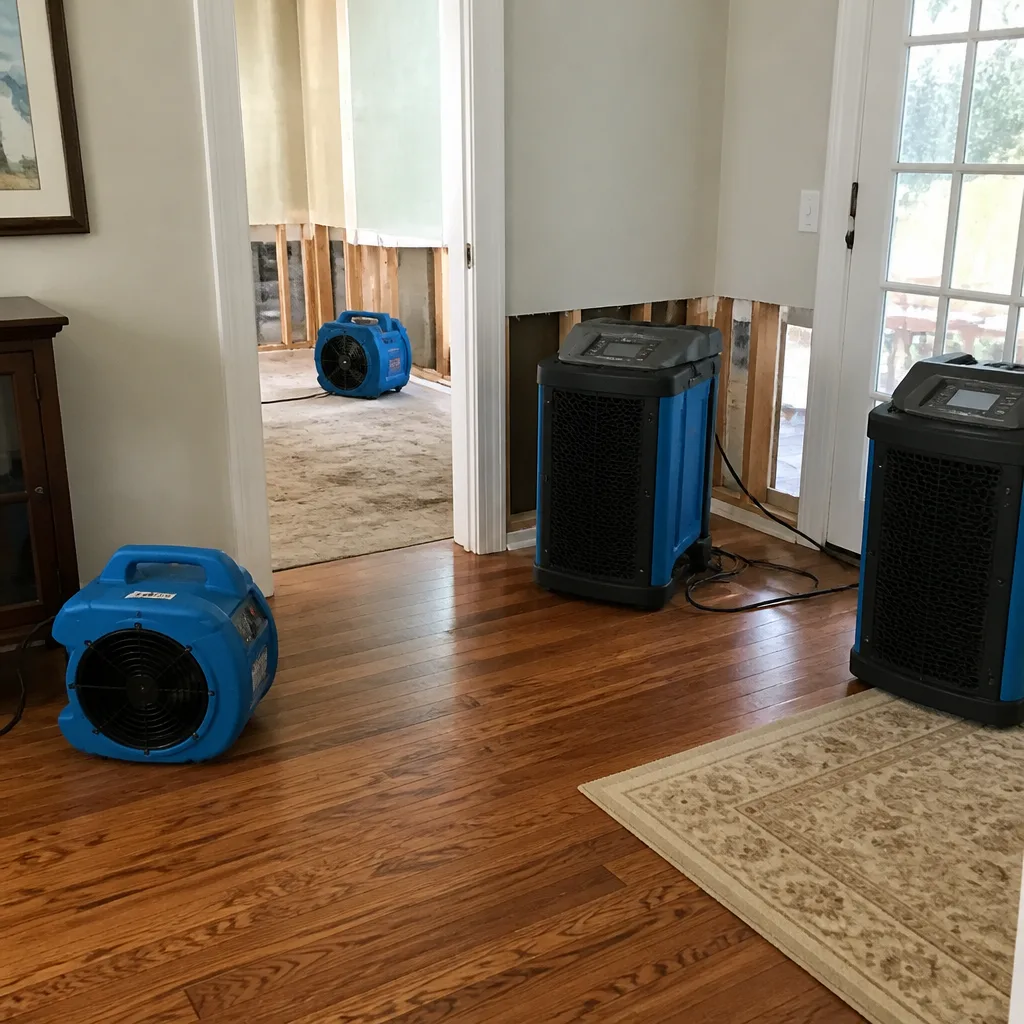
 Water damage drying
 Fire & smoke cleanup
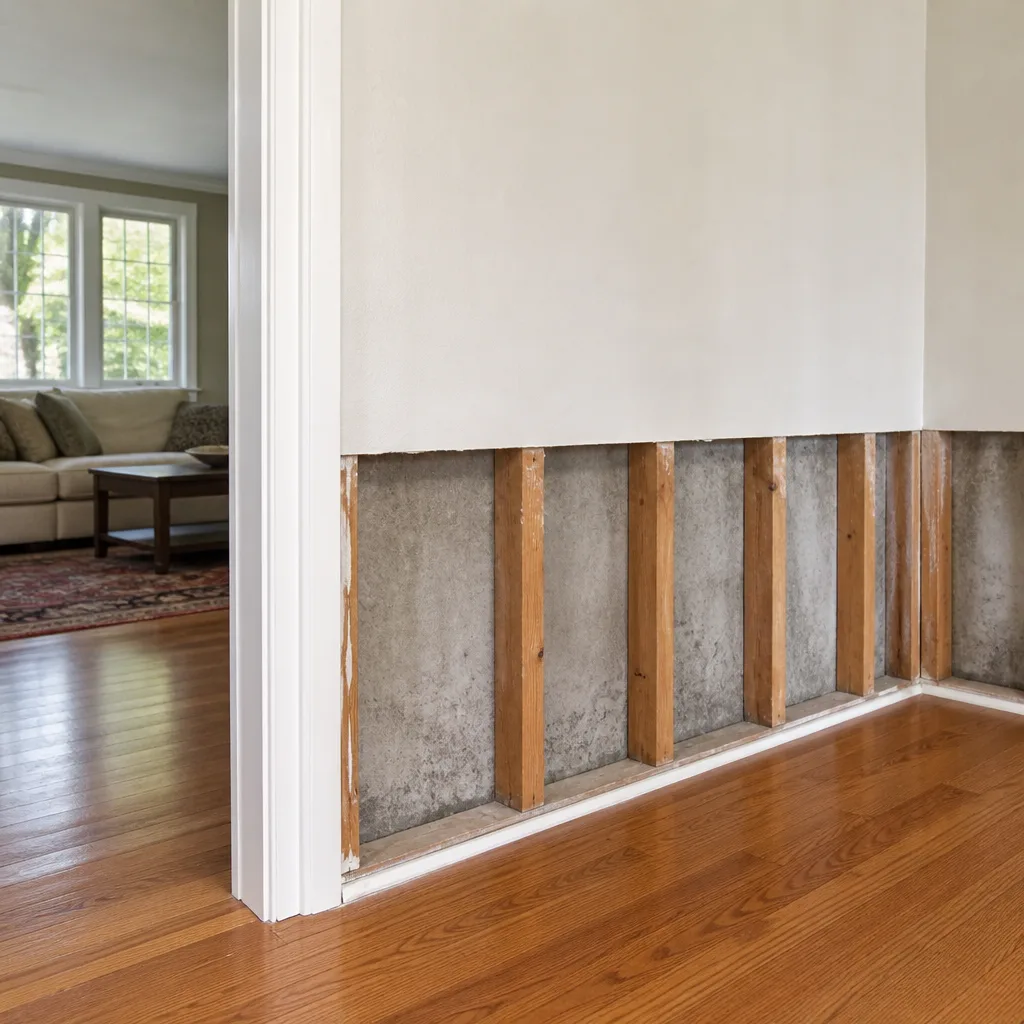 Mold remediation
 Storm response
 Sewage cleanup
 Reconstruction
Free visual inspection and a written scope of work before any mitigation begins - photos, moisture readings, and drying logs go in your claim file
The scope we write is the scope we bill. Anything new gets shown to you, in writing, before we touch it.
Get your free estimateFast, Reliable Water Damage Restoration Across Lauderdale-by-the-Sea
Water damage in Lauderdale-by-the-Sea moves fast, and so do we. Most residential water extractions in this area run between $1,800 and $4,200 before drying equipment is set, depending on how far the water has traveled and what got wet. Whether you’re in a beachfront condo on El Mar Drive or an older building west of A1A, our crews know this town’s concrete-block construction, shared walls, and salt-heavy air better than any out-of-area franchise. A live person answers 24/7 at (754) 755-2815 when you need help now, not a call center script.
We’re the Water Damage Restoration team at Marsh Water Damage Fort Lauderdale. Our techs arrive in marked vehicles, wearing uniforms and photo ID badges. You’ll know who’s coming before they knock.
Why Marsh Water Damage Fort Lauderdale Is Lauderdale-by-the-Sea’s Preferred Water Damage Restoration Company
Lauderdale-by-the-Sea property owners call us because we understand what happens inside these buildings. This isn’t a town of wood-frame bungalows. It’s a dense stretch of mid-century concrete condos and low-rise apartments holding original plumbing that’s now 50 to 70 years old. When a cast iron waste line finally gives way, water doesn’t just sit in one unit. It finds the path of least resistance through floor slabs and shared block walls. We’ve traced those paths hundreds of times.
Tobias Reyner leads our technical team, and every crew member carries IICRC, RIA, or IFA credentials. That matters when you’re looking at Category 2 water from a failed riser and wondering if the drywall can be saved. We don’t guess. We measure moisture in the concrete itself.
Response time to Lauderdale-by-the-Sea runs 45 to 75 minutes for emergency calls, depending on traffic on Commercial Boulevard. We dispatch from our South Florida office with crews staged nearby. By the time most property managers finish leaving voicemails with other companies, our extraction equipment is already pulling water out of your floors.
Restoration work we handle
Water Mitigation in Lauderdale-by-the-Sea
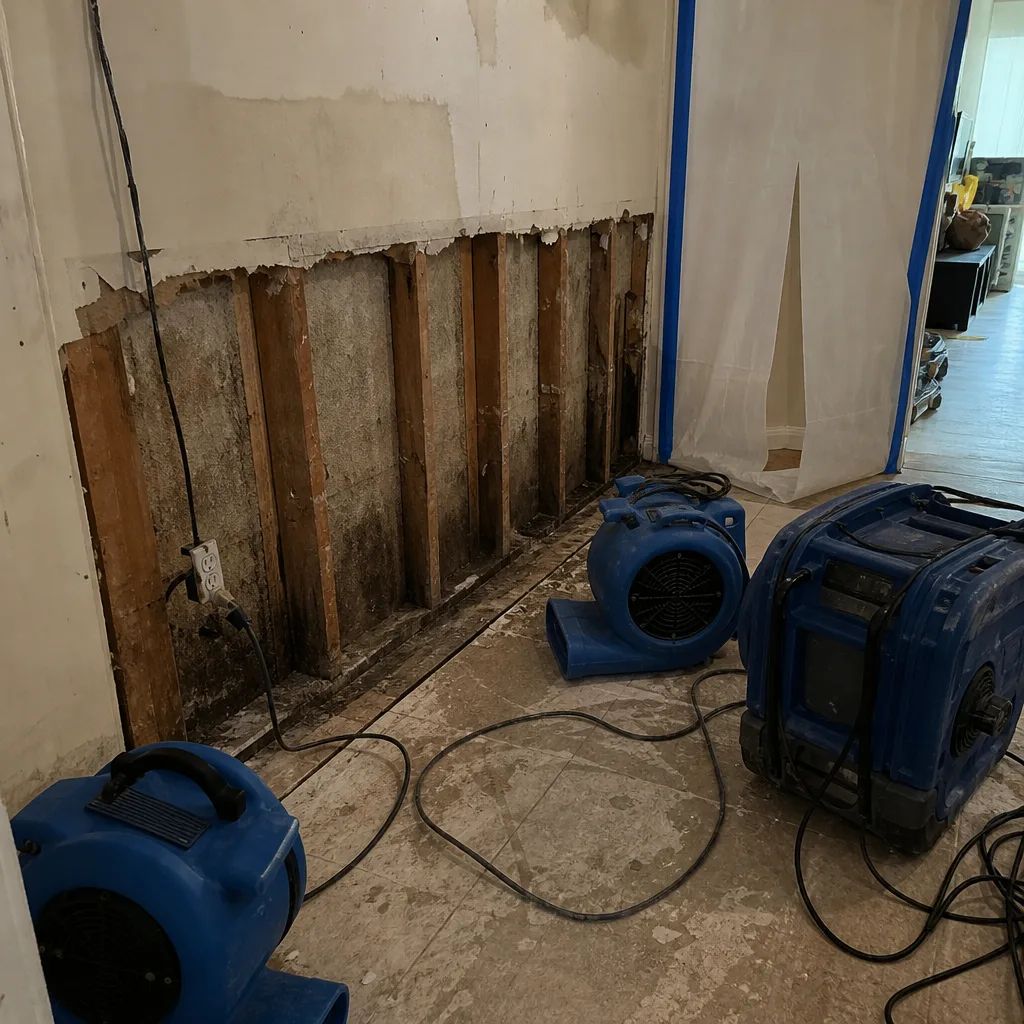
Water mitigation in Lauderdale-by-the-Sea means stopping the spread before it becomes a rebuild. It’s the first and most urgent phase: extract standing water, remove saturated materials that won’t dry, set commercial dehumidifiers and air movers, and monitor the structure until moisture readings return to pre-loss condition. A homeowner needs this immediately after a pipe burst, water heater failure, or storm intrusion; waiting even 24 hours in this climate turns salvageable drywall into a mold source. Typical mitigation for a single condo unit here runs $2,400 to $5,800 depending on square footage and whether tile, carpet, or hardwood is involved; full building riser failures can exceed that significantly since access through multiple units adds repair scope.
Concrete Substrate Drying
Drying a concrete block wall is nothing like drying a wood stud wall. Concrete holds moisture for weeks and releases it slowly, which is why we run psychrometric readings (measuring the moisture in the air and materials) daily rather than trusting the surface to look dry. In a Lauderdale-by-the-Sea condo, we often set drying equipment for 5 to 9 days, not the 3 to 4 you’d see in a frame house inland.
Containment and Mold Prevention
Because so many of these buildings have shared return-air plenums and chases between units, we set containment barriers early. Mold spores move fast in warm, humid air, and a leak in one unit shouldn’t become a smell in three others. Containment plus commercial dehumidification keeps secondary damage from spreading while your claim is processed.
Flooded Basement in Lauderdale-by-the-Sea
A flooded basement in Lauderdale-by-the-Sea is usually the result of a failed sump pump, a backed-up floor drain, or groundwater pushing through older foundation walls during heavy rainfall. Basements are less common here than in other parts of Broward County, but the buildings that have them tend to be older structures with original waterproofing that has long since deteriorated. The job involves extracting standing water, removing wet carpet pad and drywall, treating any sewage contamination as Category 3 water, and drying the space until moisture in the concrete slab reads below acceptable thresholds. Expect basement water removal in Lauderdale-by-the-Sea to cost between $3,000 and $7,500, with the higher end involving sewage or extensive flooring removal.
Category 3 Water Handling
When sewer lines back up through a floor drain, the water carries pathogens and requires full PPE, antimicrobial application, and removal of porous materials that touched the water. We treat every basement backup in this town as a potential Category 3 event until we confirm the source. That level of caution is what the job demands, and we explain it clearly before we begin.
Sump Pump Failure Response
After a heavy summer storm, a failed sump pump in a Lauderdale-by-the-Sea basement can leave several inches of water in under an hour. Our extraction crew carries submersible pumps sized for residential basements and can typically remove standing water within 2 to 3 hours of arrival, then begin the drying phase.
Trusted Brands We Service in Lauderdale-by-the-Sea
We run Dri-Eaz, Phoenix, and XPOWER equipment on every job, the same machines used in commercial high-rise losses. Our local parts stock includes common fittings and components for older condo plumbing systems throughout Lauderdale-by-the-Sea, which means we’re not waiting on a distributor when a repair needs one specific adapter. You aren’t buying a brand when you call us. You’re hiring engineers and technicians who know which machine belongs on which surface and for how long.
See the difference
 Before
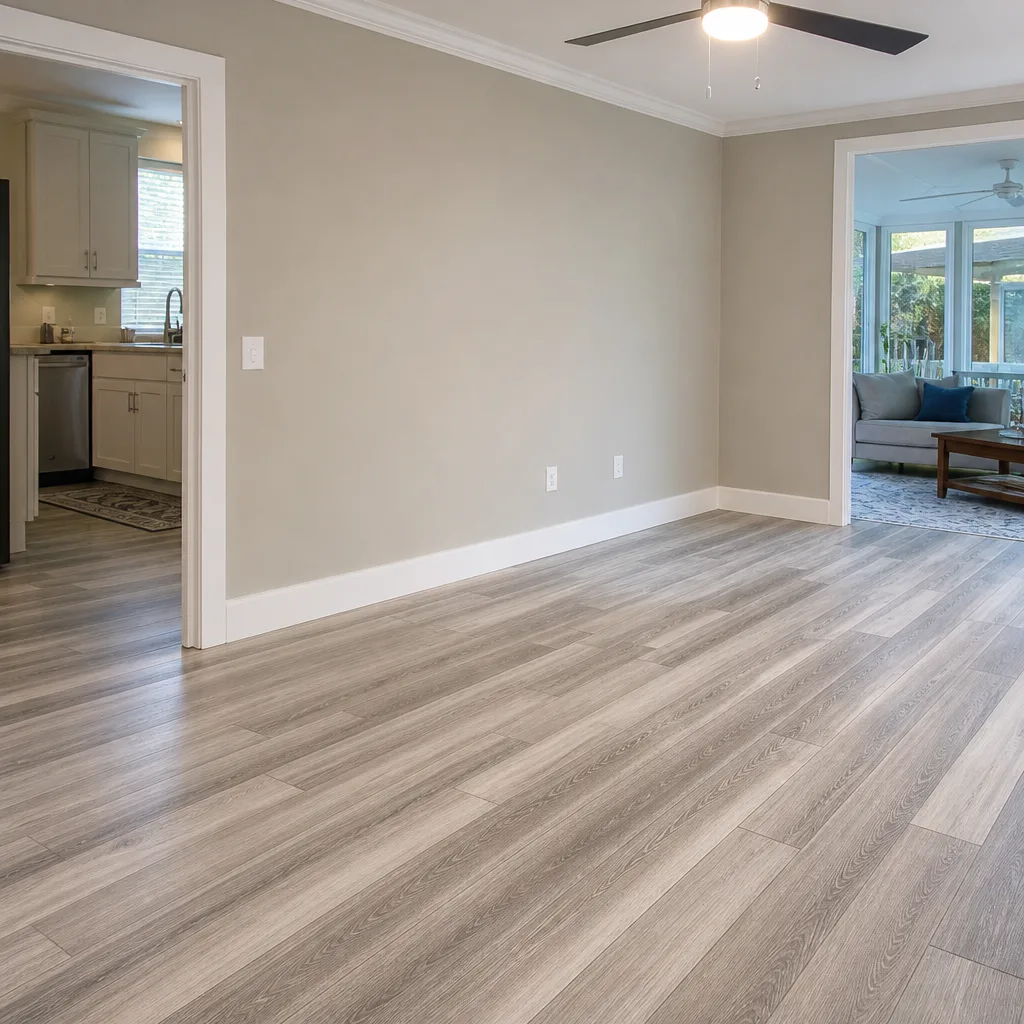 After
After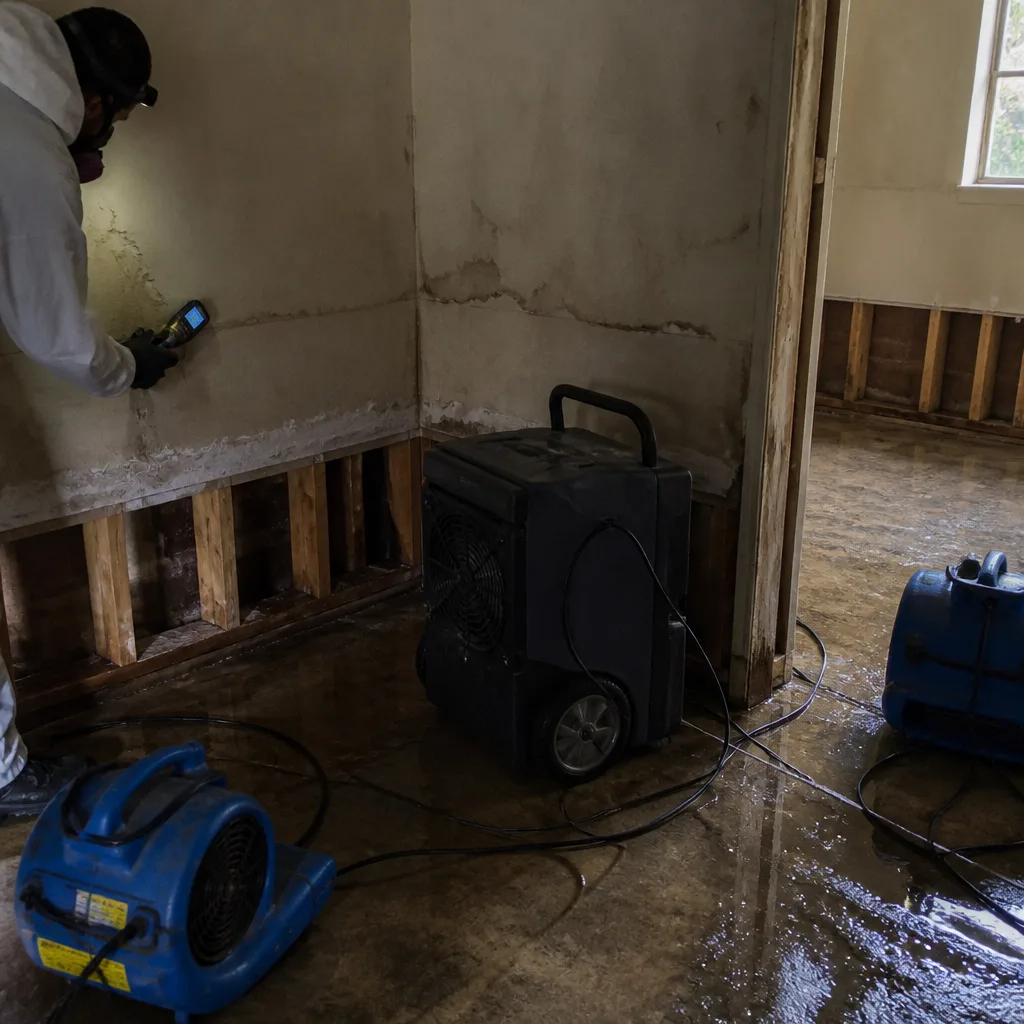 Before
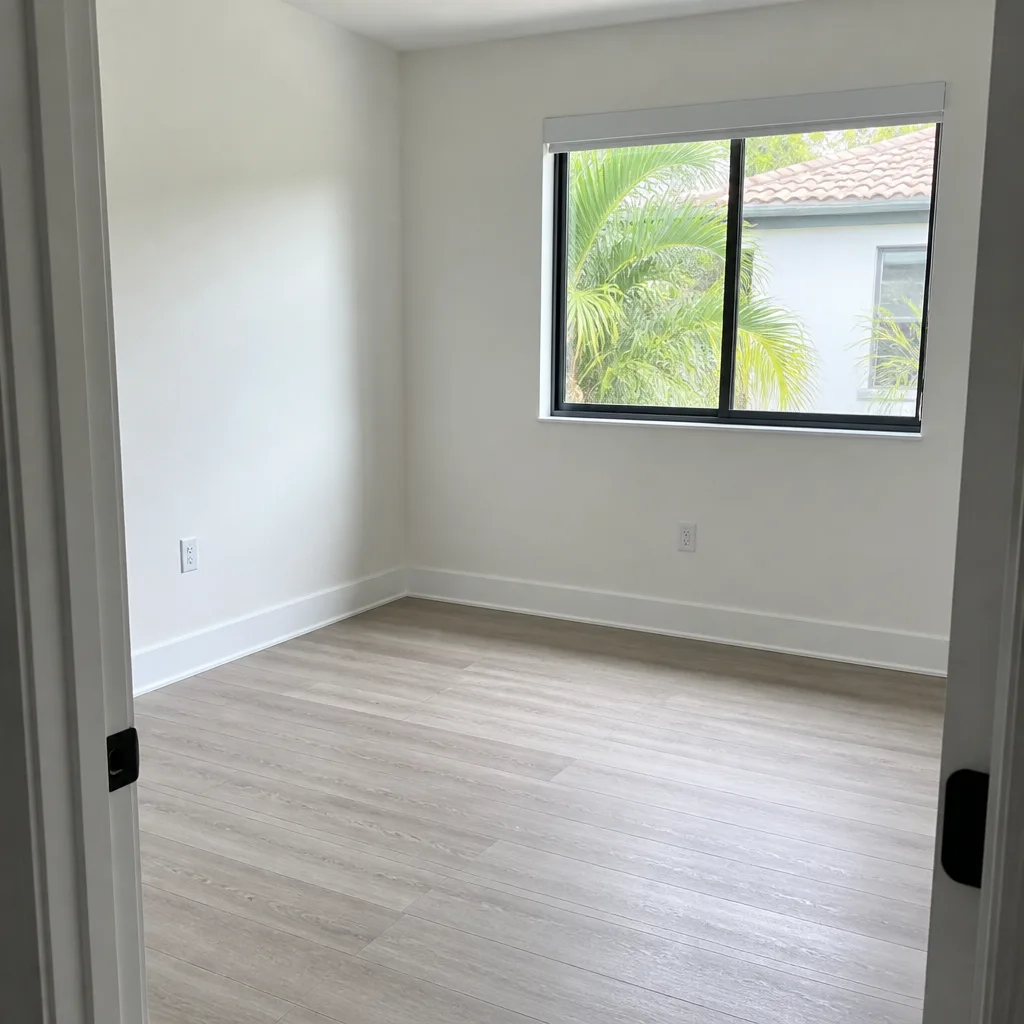 After
After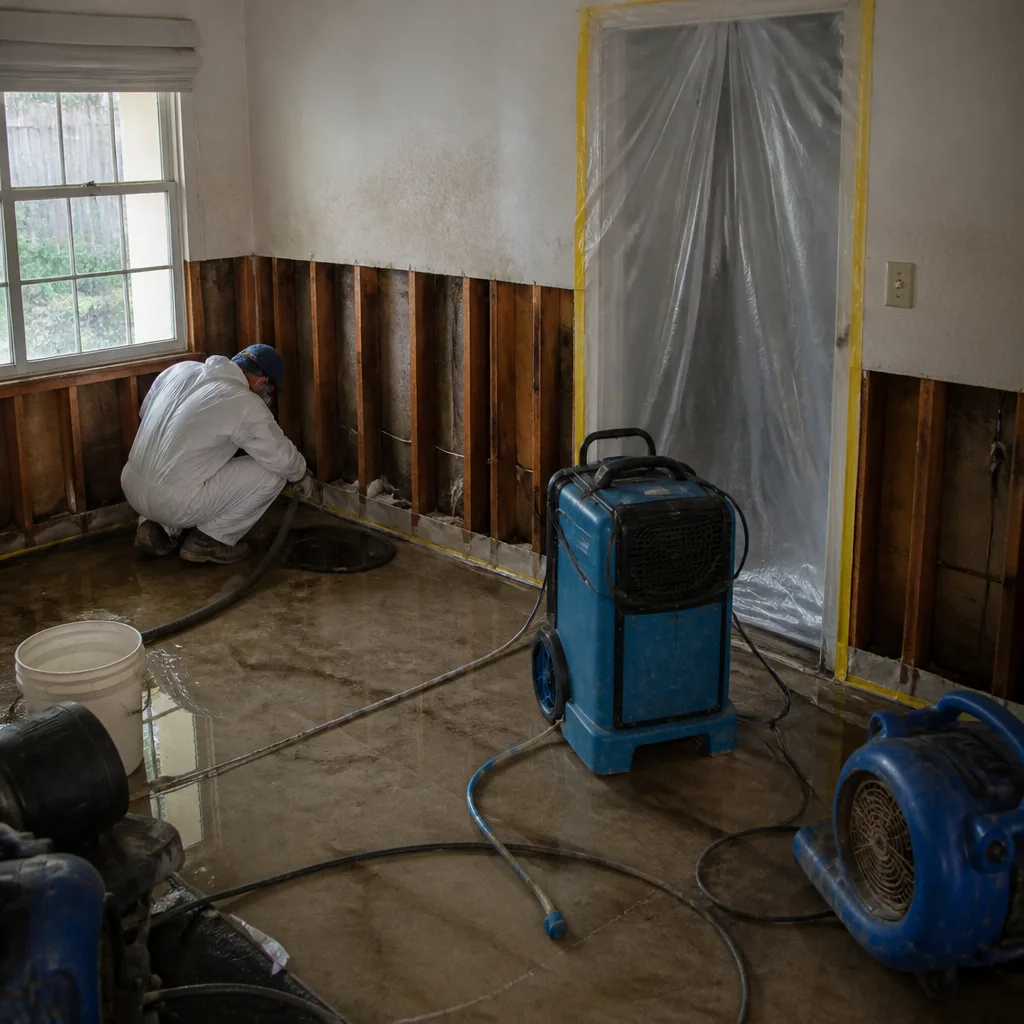 Before
 After
AfterCommon Water Damage Restoration Problems We See in Lauderdale-by-the-Sea Homes
- Corroded cast iron waste lines. In buildings from the 1950s through 1970s, original cast iron has been quietly failing for years. When it lets go, sewage or gray water travels down through floor cavities and shows up in the ceiling of the unit below. By the time you see the stain, the pipe has been leaking for longer than you’d think.
- Salt air corrosion on electrical and HVAC components. Condensation drips from corroded air handler pans or failed condensate lines are constantly mistaken for roof leaks. Salt from the ocean accelerates that corrosion, so beachfront units on El Mar Drive and Bougainvilla Drive see these failures years earlier than inland homes.
- Wind-driven rain through aging flat roof seams. Summer thunderstorms don’t fall straight down here. Wind pushes rain sideways into roof edge details and window frames on older low-rise buildings, saturating gypsum board that sits directly against concrete. That drywall typically cannot be dried in place; it has to come out.
- Water migrating through shared walls and ceilings. A pinhole leak in a third-floor unit’s galvanized riser can wet two floors below before anyone notices. Because these buildings share demising walls made of concrete block, water travels inside the block cavities and exits wherever it finds an opening, often nowhere near the source.
Pricing for Water Damage Restoration in Lauderdale-by-the-Sea, FL
Here are straight numbers for Lauderdale-by-the-Sea. Emergency water extraction for a single condo unit runs $1,800 to $4,200. Structural drying with dehumidifiers and air movers adds $800 to $2,400 depending on equipment days. A flooded basement with sewage is $3,500 to $7,500. Cast iron riser replacement across multiple units starts around $5,000 and climbs based on access. Every estimate is written before any work begins, stamped with our 365-Day Done Right Promise, and if something isn’t right within a year, we return and fix it free, including a second visit automatically. Call (754) 755-2815 for a free estimate. You’ll get numbers, not vague reassurances.
We Also Serve Cities Near Lauderdale-by-the-Sea
Our crews regularly work in Fort Lauderdale, Hollywood, Plantation, and Tamarac, many of which share the same aging condo stock and coastal moisture patterns. If you own property just outside town, our team is already familiar with the construction style and can reach you quickly. For more about our full service area, see Water Damage Restoration in Lauderdale-by-the-Sea and the surrounding communities we cover.
Serving Lauderdale-by-the-Sea, FL - Our Local Coverage Area
We’re based in the Lauderdale-by-the-Sea area and know this community well. Use the map below to see our service coverage - if you’re nearby, we can almost certainly help.
FAQs About Water Damage Restoration in Lauderdale-by-the-Sea
Salt air accelerates corrosion on metal plumbing, electrical connections, and HVAC components, which means leaks in beachfront units often originate from rusted fittings or pinholes in galvanized risers rather than obvious pipe breaks. Restoration requires identifying the corrosion source first, since simply drying the visible damage without addressing the corroded component means the leak returns. We inspect for salt-driven corrosion patterns specific to oceanfront buildings before recommending any drying plan.
Because most condos here were built with shared concrete block demising walls and poured floor slabs, water travels through the block cavities and along rebar paths far from the original leak. A pinhole in a third-floor riser can saturate ceilings and walls two floors below before anyone sees a stain. That’s why we use moisture mapping across adjacent units, not just the one where the water appeared.
Concrete holds moisture deep inside and releases it slowly, so surface readings can look dry while the block wall is still wet enough to support mold growth. This requires longer drying times, often 5 to 9 days, and daily psychrometric monitoring to confirm the concrete has genuinely returned to pre-loss moisture levels. Rushing this phase in a concrete building is the most common cause of recurring mold problems we see.
In this town’s warm, humid air, mold can begin colonizing wet drywall and organic materials within 24 to 48 hours, faster in beachfront units where ambient humidity runs consistently high. That’s why emergency extraction and dehumidification cannot wait for business hours. The sooner drying equipment is running, the more material can be saved instead of cut out and replaced.
Yes. Original cast iron waste lines from the 1950s, 60s, and 70s have a known failure pattern, and restoration in these buildings often means addressing pipe replacement or repair alongside drying. We plan the drying scope around the future plumbing repair so you don’t tear out drywall twice. Call (754) 755-2815 and we’ll walk you through what your specific building needs.
Written by Tobias Reyner, Owner at Marsh Water Damage Fort Lauderdale, serving Lauderdale-by-the-Sea.