
Last updated October 16, 2026
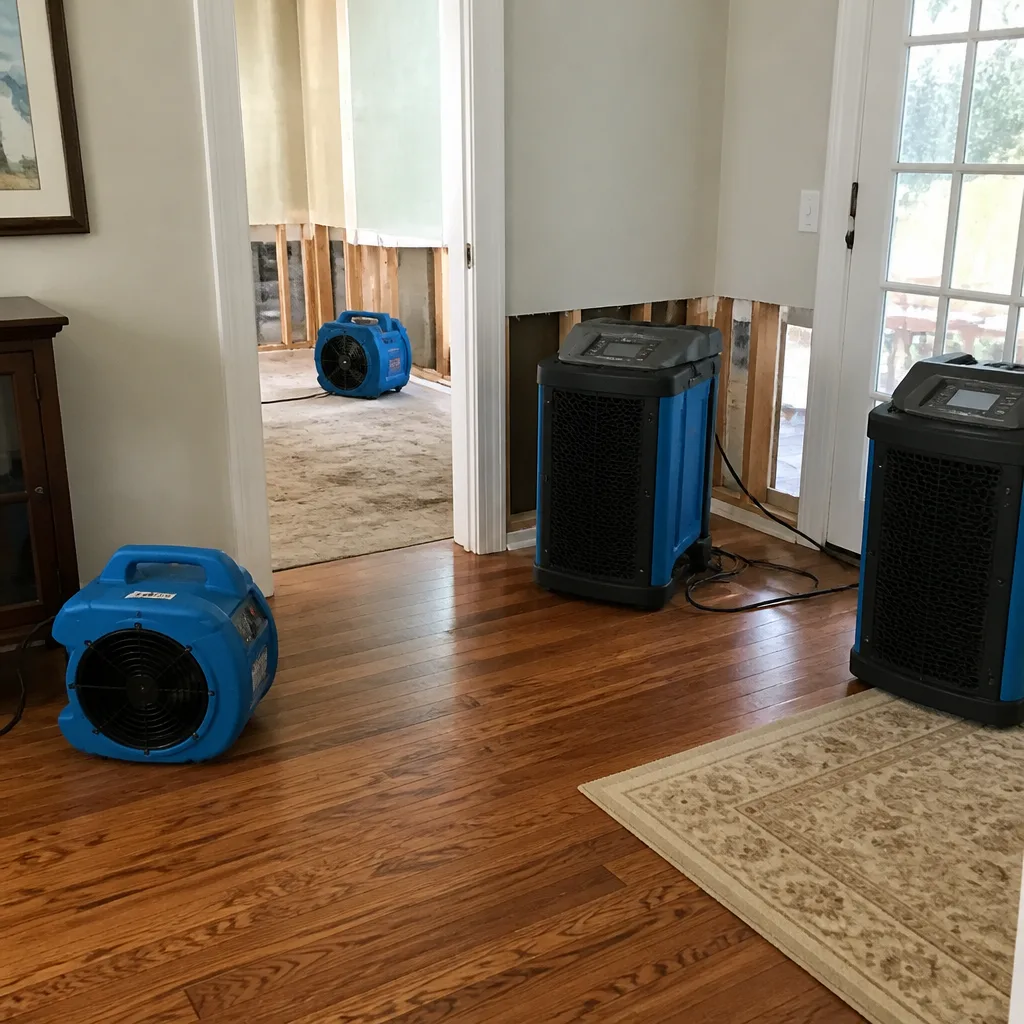 Water damage drying
 Fire & smoke cleanup
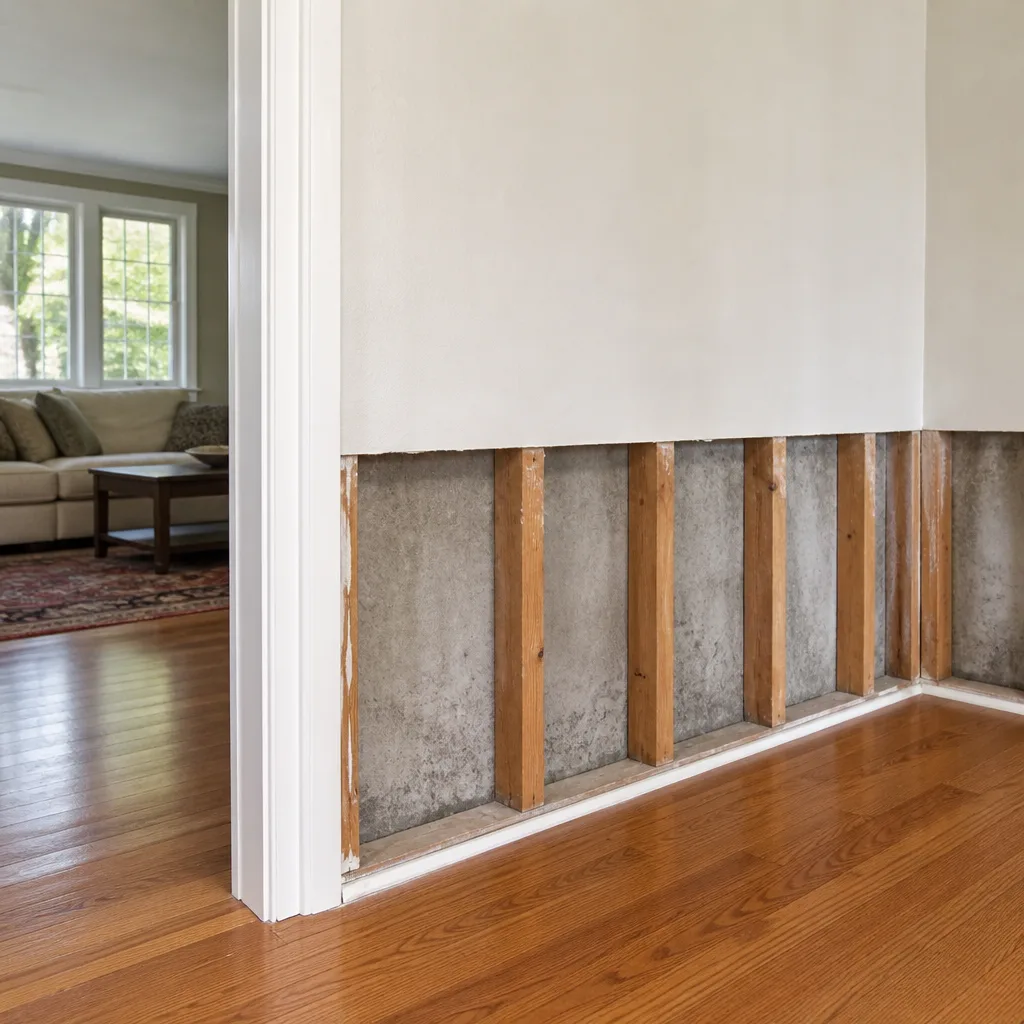 Mold remediation
 Storm response
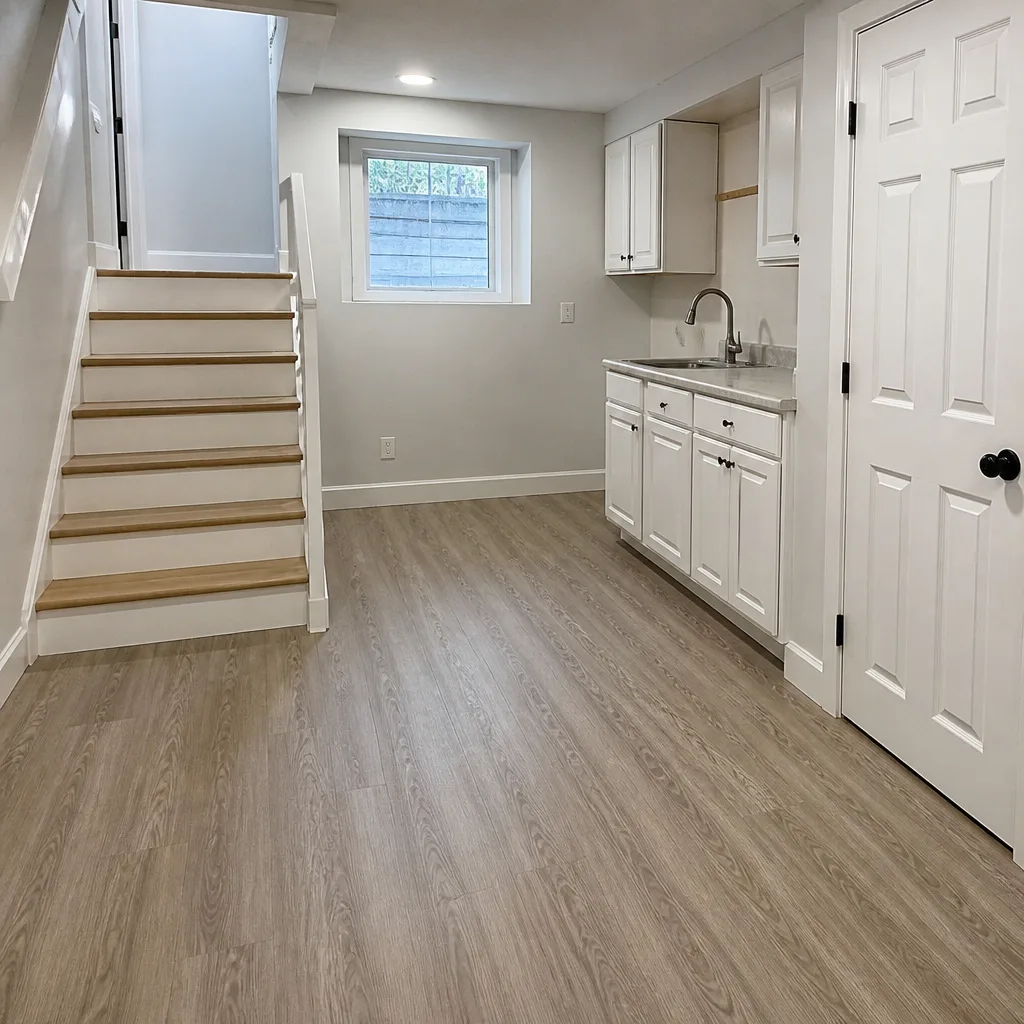 Sewage cleanup
 Reconstruction
Free visual inspection and a written scope of work before any mitigation begins - photos, moisture readings, and drying logs go in your claim file
The scope we write is the scope we bill. Anything new gets shown to you, in writing, before we touch it.
Get your free estimateDIY vs Professional Damage Restoration: The Fort Lauderdale Homeowner’s Decision Guide
Here’s a number that should stop you cold: more than half of the water damage claims we walk into in Fort Lauderdale involve a homeowner who already tried to fix it themselves. Not a small patch, not a visible spill. A real leak hiding behind drywall, under tile, or beneath a cabinet. And in most of those cases, the DIY attempt added anywhere from a week to a full month of extra drying time, because moisture had already wicked into the framing while the surface looked dry. This guide exists to give you one thing: a clear line you can draw between what you can handle yourself and what you should hand to a professional, with no gray area in between. For more guides & resources, see our blog.
Quick Answer
DIY water damage restoration in Fort Lauderdale is only appropriate for clean-water spills smaller than about 10 square feet that you catch within 24 hours and can fully dry with fans and a dehumidifier within 48 hours. If you’re unsure where your situation falls, our How to Hire a Damage Restoration Contractor in Fort Lauderdale: A Step-by-Step Guide can help you evaluate your options. Anything beyond that, any water from a contaminated source, any claim you plan to file with insurance, or any situation where moisture has touched drywall, flooring, or framing, should be handled by a professional restoration company. In South Florida’s climate, the margin for error is thinner than you think.
Restoration work we handle
Table of Contents
- The Invisible Line: What DIY Actually Costs in Fort Lauderdale
- The Three Questions That Decide DIY vs Professional
- What You Can Do in the First Hour (and What You Should Never Do)
- The Equipment Gap: What Pros Bring That Home Depot Doesn’t
- The Insurance Trap: How DIY Restoration Can Damage Your Claim
- Telling a Restoration Company What You’ve Already Done
- Why Fort Lauderdale’s Climate Changes the Math
- The Mold Timeline: When Waiting Costs More Than Calling
The Invisible Line: What DIY Actually Costs in Fort Lauderdale
Every water damage situation in Fort Lauderdale has a line running through it. On one side is water you can see and touch. On the other side is water you cannot see, moving through materials by capillary action and gravity. The moment water crosses from visible to invisible, DIY stops being restoration and starts being concealment. You’re not removing the problem. You’re hiding it from yourself.
We’ve walked into homes in Victoria Park where a homeowner spent a weekend with a rented carpet cleaner, then put the furniture back and called it done. Twelve months later, the baseboards started to bow. Eighteen months later, the drywall tested positive for mold behind the surface. The cost to fix it properly was three times what a professional extraction and drying job would have cost on day one. The DIY attempt didn’t save money. It simply deferred the cost into a larger one.
This is the core of the DIY-versus-professional question for Fort Lauderdale homeowners. It’s not about skill, and it’s not about pride. It’s about whether water has moved into materials that cannot be dried by air movement alone. Once water is inside drywall, behind tile, under vinyl plank flooring, or in wall cavities, the physics changes. Drying requires controlled airflow, measured humidity gradients, and time, not just towels and box fans.
Marsh Water Damage Fort Lauderdale has been restoring homes in this city since 2005. We deal with a marsh, literally, the low wet ground where water shouldn’t be. Our crews carry moisture meters, thermal imaging cameras, and commercial drying equipment. We say that not to impress you, but to make the point that we can see what you can’t. And that’s the whole difference.
The Three Questions That Decide DIY vs Professional
Here is the objective threshold test. Three questions, no gray area. Answer them honestly and the decision makes itself.
Question 1: How big is the affected area?
Pull out a tape measure. If the wet area is smaller than 10 square feet, roughly the size of a bath mat, and the water was clean, you’re in DIY territory, barely. For a complete breakdown of what to check, download our Water Damage Restoration Maintenance Checklist for Fort Lauderdale Homeowners. If it’s bigger than 10 square feet, or you can’t tell where the water stops because it’s under flooring or behind a wall, that’s professional territory. Water wicks outward from the visible pool. A 10-square-foot puddle on tile can mean 40 square feet of wet subfloor underneath.
Question 2: What kind of water is it?
The restoration industry uses three categories of water, and the distinction matters more than the amount. Category 1 is clean water from a supply line, a faucet, or a water heater. Category 2 is gray water, meaning soapy water from a washing machine, dishwasher, or shower drain. Category 3 is black water, meaning sewage, floodwater, or anything that has touched feces, chemicals, or standing water that’s begun growing bacteria. If your water is Category 2 or 3, you don’t DIY it. Period. The health risk from aerosolized bacteria during cleanup is real, and a professional crew wears the right PPE and uses the right extraction methods for it. Fort Lauderdale’s storm surge and canal overflow events almost always produce Category 3 water.
Question 3: How long has the water been sitting?
Under 24 hours and the water is clean? You might be able to dry it yourself. Over 24 hours? Mold spores, which are already everywhere in South Florida’s air, have had time to germinate and multiply. At 48 hours, the risk is no longer theoretical. In Fort Lauderdale’s average indoor humidity, visible mold can start forming within 48 to 72 hours after water intrusion. If the water sat overnight while you were at work, you’re probably past the window.
If you answered “over 10 square feet,” “Category 2 or 3,” or “over 24 hours,” the professional call is the right one. And if you’re planning to file an insurance claim at all, the professional call is the only call.
What You Can Do in the First Hour (and What You Should Never Do)
The first hour after water damage in Fort Lauderdale matters. Here is exactly what you can do safely and effectively, and what you should avoid.
- Stop the water at the source. Shut off the main water valve, or the fixture supply line, or turn off the appliance that’s leaking. If you don’t know where your main shutoff is, find it now, not during an emergency. For most Fort Lauderdale homes, it’s near the water heater or in the front yard by the curb.
- Kill the electricity in the affected area. Water and electricity don’t mix. If your breaker panel is safe to access, cut power to the affected rooms. If the panel is wet, don’t touch it. Call an electrician first.
- Move what you can move. Books, electronics, photos, rugs, small furniture. Get them up off the floor and out of the wet zone. Paper and upholstery absorb moisture fast and hold it.
- Begin surface extraction. Towels, mop, wet-dry vacuum if you have one. Remove as much standing water as you can from hard surfaces. Every gallon you remove is a gallon that won’t wick into the walls.
- Start airflow. Ceiling fans, box fans, open windows if the outside air is drier. Air movement accelerates evaporation from surfaces. But understand the limits: a box fan dries air. It doesn’t dry inside a wall cavity.
Now, here is what you should never do. Never use a household vacuum cleaner on water. It’s a fire and electrocution hazard. Never apply heat from a space heater or hair dryer directly to wet drywall; you’ll bake moisture deeper into the material. Never pull up carpet without understanding what’s underneath. Never open up a wall cavity to “let it air out” without knowing what you’re opening. Never spray bleach on mold; it doesn’t kill the roots, and it creates a worse breathing hazard.
And one more, specifically for Fort Lauderdale homeowners: never assume the water stopped where the stain stopped. Water travels laterally under tile, under vinyl, down walls, along floor joists. The visible stain is the minimum extent of the damage, not the maximum.
The Equipment Gap: What Pros Bring That Home Depot Doesn’t
A hardware store rented dehumidifier and a box fan are not the same thing as professional restoration equipment. They are not a smaller version. They are a different category of tool. And in Fort Lauderdale’s climate, the difference between them is the difference between a dry home and a hidden mold problem.
Here’s the direct comparison. A typical rental dehumidifier pulls maybe 15 to 20 pints of water per day under ideal conditions. A commercial desiccant dehumidifier, like the Dri-Eaz and Phoenix units we run, pulls 70 to 130 pints per day, and it works in conditions where a rental unit stalls out entirely. South Florida’s humidity, often 70 to 80 percent, dramatically reduces the efficiency of all dehumidifiers, but smaller units fall off a cliff. The commercial units are engineered specifically for this environment.
Extraction is the bigger gap. A wet-dry vac pulls water off a surface. A truck-mounted extractor pulls water out of carpet, padding, and the subfloor beneath, at hundreds of pounds of vacuum pressure. We use equipment from Dri-Eaz, Phoenix, XPOWER, B-Air, and Injectidry, the same gear you’d see on a large commercial loss, because Fort Lauderdale’s groundwater table and humidity mean water doesn’t evaporate here the way it does in, say, Phoenix, Arizona. The name is ironic. Phoenix, Florida would have a different problem.
Then there’s measurement. A professional restoration crew uses moisture meters and thermal imaging cameras to map the full extent of the water, including water you can’t see. We use psychrometric readings (measuring the moisture in the air and in materials) to determine when the structure is genuinely dry, not just dry on the surface. A rental dehumidifier has no way to tell you that. It just runs. You stop it when you’re tired of the noise.
The Insurance Trap: How DIY Restoration Can Damage Your Claim
Here’s a scenario we see often in Fort Lauderdale. A homeowner finds a leak under the kitchen sink. It’s been going for a day, maybe two. They clean it up. They use towels, maybe a fan, maybe a rental dehumidifier. The visible water is gone. A month later, the cabinet doors don’t close right, the floor is soft, and there’s a smell. They call the insurance company. The claim is filed, and the adjuster comes out.
The question the adjuster asks, almost always, is: did you do anything yourself? And the answer matters. When a homeowner has performed DIY restoration and then files a claim for secondary damage, the insurer may argue that the damage was made worse by the homeowner’s actions, or lack of professional mitigation. In Florida, the burden of proof for storm and water damage claims is already onerous. Adding a DIY variable doesn’t help.
The correct sequence, if you plan to file an insurance claim at all, is this: document everything, then call your insurer, then call a restoration company. Photos and video of the damage before you touch anything. A written log of when you first noticed the water, what you did, and when. Then, and this is the key part, let a professional restoration company do the mitigation. We document everything again, in writing and with photos, and we work directly with adjusters.
Many Fort Lauderdale homeowners don’t realize that professional restoration work is typically covered by homeowner’s insurance. The mitigation, the drying, the demo, the rebuild. You’re not paying for peace of mind. You’re paying your premium. You might as well use it. The Water Damage Restoration in Fort Lauderdale process includes direct insurance billing and adjuster coordination, which means the professional restoration company becomes your advocate in the claim process, not a line item you have to fight for.
Telling a Restoration Company What You’ve Already Done
This is the section most guides skip, and it’s the one that matters most for your legal and financial protection. You’ve already tried something. You used a wet-dry vac, you ran a fan, you peeled back a corner of the carpet, you cut a hole in the drywall to “see how bad it is.” Now you’re calling a professional. What do you say?
You tell them everything.
Here’s why. A restoration technician arriving at your home is building a picture of the damage from what they see and measure. If you conceal the fact that you already opened a wall, moved the carpet, or ran a heater on the floor, the readings they gather will not match the true history of the damage. More importantly, when the insurance adjuster reviews the file and finds evidence of DIY work that wasn’t disclosed, it creates doubt about the claim. Doubt is the one thing you never want in an insurance claim.
Tell the restoration company: I noticed the water at this time, I did these things, I used this equipment, I opened this area, I put this back. That transparency protects you. It gives the restoration company the full picture so they can document the damage accurately. And in our experience, no reputable restoration company penalizes a homeowner for trying to help. We’d rather know what you did than walk into a surprise.
Marsh Water Damage Fort Lauderdale applies the Threshold Verified standard to every visit. That means the technician who comes to your home has been background-checked and identity-verified. You’ll get their name and photo before the visit, and they’ll show you a photo ID badge at the door. We built this process because we know that calling a restoration company means letting a stranger into your home at one of the most stressful moments of homeownership. The Threshold Standard is our answer to that fear. You know who’s coming before they knock.
If you need professional mitigation, Marsh Water Damage Fort Lauderdale home is the starting point for honest, documented restoration. Written price before any work starts. Written guarantee on every repair. A 365-Day Done Right Promise that is printed on every work order, not whispered as a sales line.
Why Fort Lauderdale’s Climate Changes the Math
Fort Lauderdale is one of the most humid cities in the continental United States. Average outdoor relative humidity hovers around 75 percent, and indoor humidity in a non-conditioned space can exceed that. Our Seasonal Damage Restoration Care for Fort Lauderdale: Year-Round Homeowner’s Guide explains how these conditions shift throughout the year. This isn’t a minor detail. It’s the entire context for understanding water damage restoration here.
In a dry climate, water on a floor evaporates. The air absorbs it, and if you open a window, the moisture leaves. In Fort Lauderdale, the air is already near its saturation point. Open a window after a rain event and you may be bringing more moisture in than you’re letting out. A fan that works beautifully in Denver does almost nothing in Fort Lauderdale if the air it’s moving is already wet. This is why equipment rated for other climates underperforms here, and why the professional standard in this city requires desiccant drying technology rather than rental-grade refrigerant dehumidifiers.
There’s a second Fort Lauderdale factor: the water table. Much of the city sits at or near sea level, with a high groundwater table and a canal system that moves water through neighborhoods. The area is, in fact, a drained marshland. The name Marsh Water Damage Restoration is no accident. During heavy rain events, water doesn’t just come from the sky. It comes up from saturated soil, through slab foundations, through coquina and limestone that wick moisture vertically. Homes in older neighborhoods like Sailboat Bend, Riverside Park, and Shady Banks deal with groundwater intrusion that homeowners in higher elevations never see. This is a uniquely Fort Lauderdale problem, and it changes what counts as “dry.”
A professional restoration company in Fort Lauderdale knows this. We measure moisture in framing and slab, not just in the air and on carpet. We understand that a home that’s “dry” by the standards of a national franchise’s training manual may still be holding enough moisture to support mold growth in this climate. The standard is local, not generic.
If you’re dealing with water that entered through a roof, windows, or walls during a storm, the Storm Damage Restoration in Fort Lauderdale process accounts for this climate in the drying plan. The goal is not to make surfaces feel dry. The goal is to bring the entire structure back to its pre-loss moisture equilibrium, which in this city is lower than the outdoor air, not higher.
The Mold Timeline: When Waiting Costs More Than Calling
Mold is the reason this guide exists. If Fort Lauderdale had Denver’s climate, DIY water damage restoration would be a much more viable option. But mold changes the calculation entirely, and mold does not wait.
The timeline in this climate is aggressive. Day one: water intrusion, invisible spores in the air, no visible growth. Day two to three: spores germinate and begin to colonize wet materials, especially paper-faced drywall, carpet padding, and wood. Day four to seven: visible mold spots may appear, often in bathrooms, behind furniture, or in corners. Week two: mold is established, releasing spores into the air of your home. Month one: hidden mold colonies inside wall cavities are now producing mycotoxins that can affect indoor air quality. Eighteen months: the homeowner who sealed the wall up after a DIY dry now opens it to find the colony has spread significantly, and the remediation cost includes demolition, containment, HVAC cleaning, and restoration.
We’ve seen this timeline play out in every corner of Fort Lauderdale. In Coral Ridge, a slow leak under a bathroom vanity that went three weeks before anyone noticed. In Tarpon River, a pipe burst behind a finished basement wall, the homeowner dried the carpet and thought it was over, and the mold grew inside the wall for a year. In Imperial Point, a roof leak after a summer storm that dripped into an attic and went unnoticed until the ceiling showed stains. Each time, the professional remediation cost more than the initial water mitigation would have.
The point is not that every DIY job leads to mold. The point is that in this climate, the risk is structural. The odds are not with you. The air is wet, the spores are everywhere, and the timeline is short. If you see signs of mold, the Mold Remediation in Fort Lauderdale process is not a cosmetic cleaning. It’s containment, removal, air scrubbing, and source correction, done under negative air pressure so spores don’t spread to the rest of the house. That’s not fear-mongering. That’s the standard for a reason.
What a Professional Restoration Process Actually Looks Like
If you’ve never been through a professional water damage restoration in Fort Lauderdale, here’s the sequence, stripped of jargon. Knowing what to expect reduces the fear of the unknown, and it also tells you what to demand from any company you call.
- 1
Assessment and documentation. A technician arrives, assesses the affected area, measures moisture with meters and thermal imaging, and documents everything in writing and photos. You get a scope of work and a written price before any work begins. If a company won’t put the price in writing before starting demo, pick a different company.
- 2
Extraction. Standing water is removed with professional extractors, not a wet-dry vac. The goal is to remove water from carpet, padding, subfloor, and any other surface that’s holding it.
- 3
Demolition of unsalvageable materials. Drywall that’s soaked through, carpet padding, and insulation are removed and discarded. Materials that can be dried are identified.
- 4
Drying. Commercial air movers and dehumidifiers are placed strategically, based on the size and shape of the affected area. The equipment runs continuously, and the restoration company returns daily to measure progress. Drying typically takes three to five days for a moderate loss.
- 5
Mold prevention and sanitation. Once the structure tests dry, antimicrobial solutions are applied to prevent mold growth. Air scrubbers run during the process to capture airborne spores.
- 6
Rebuild and repair. The final phase: drywall, paint, flooring, trim. The goal is pre-loss condition.
Every step of this process at Marsh Water Damage Fort Lauderdale is documented, and the documentation is shared with your insurer. You’re not paying for the process twice. You’re paying for someone who knows how to do it once, correctly.
Cost Reality Check: What DIY Saves, What It Doesn’t
Let’s talk money, because the DIY-versus-professional question is almost always framed as a money question. Here’s the straight comparison for Fort Lauderdale.
A DIY cleanup for a small, clean-water spill: the cost is towels, a rental dehumidifier from a big-box store, maybe a wet-dry vac you already own. Call it $75 to $150, plus your time. If the spill is truly small and clean and you catch it immediately, DIY can be entirely appropriate. No argument.
A professional water extraction and drying job for a moderate loss in Fort Lauderdale, say a 10-by-10 room with soaked carpet, wet drywall up to two feet, and the associated water: most residential extractions run between $1,500 and $4,500 before drying equipment is fully set and running. That’s the range we see, though every job is different and the written price is what governs. The larger the affected area, the higher the cost. A whole-house loss from a storm or major pipe failure can run significantly more.
Now here’s what DIY “saves” can cost. A mold remediation for a hidden colony that grew because an area wasn’t properly dried: $3,000 to $8,000 on average in Fort Lauderdale, depending on the size and location. Replacing a subfloor that rotted because water sat underneath the laminate: $2,000 to $5,000. Replacing baseboards, drywall, and insulation that warped and grew mold: $2,000 to $6,000. The math is not favorable.
The comparison isn’t “$150 versus $4,500.” It’s “$150 now plus a 20 to 40 percent chance of $5,000 later versus $4,500 now with the cost covered by insurance.” In Fort Lauderdale’s climate, the odds push the decision toward professional, not away from it.
See the difference
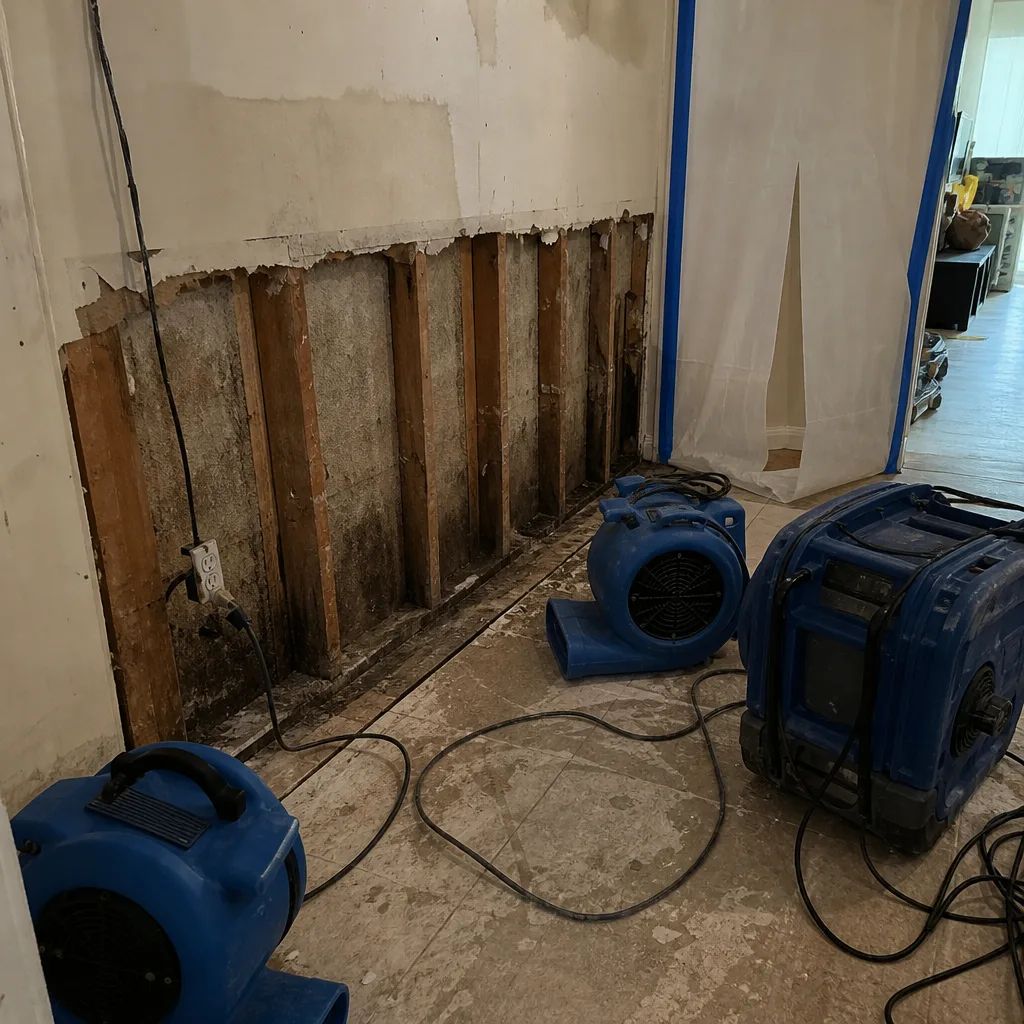 Before
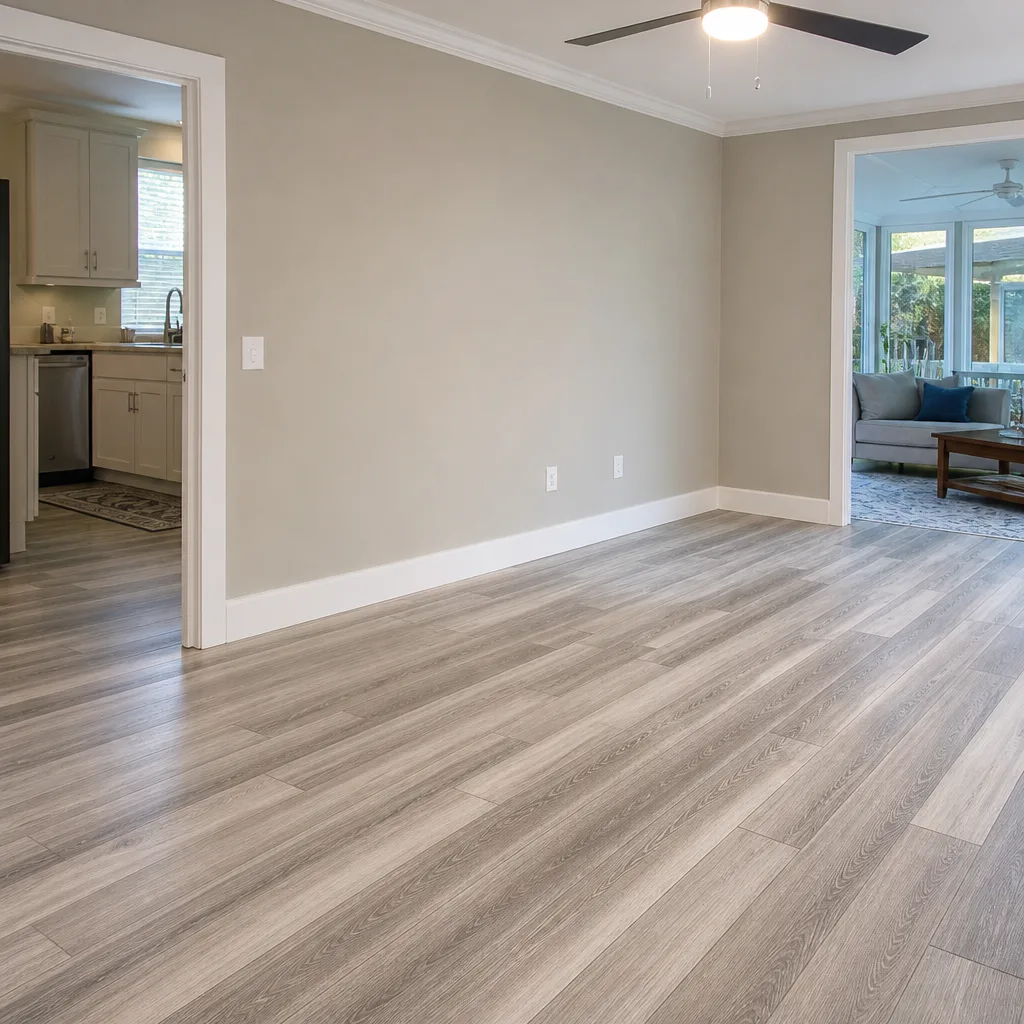 After
After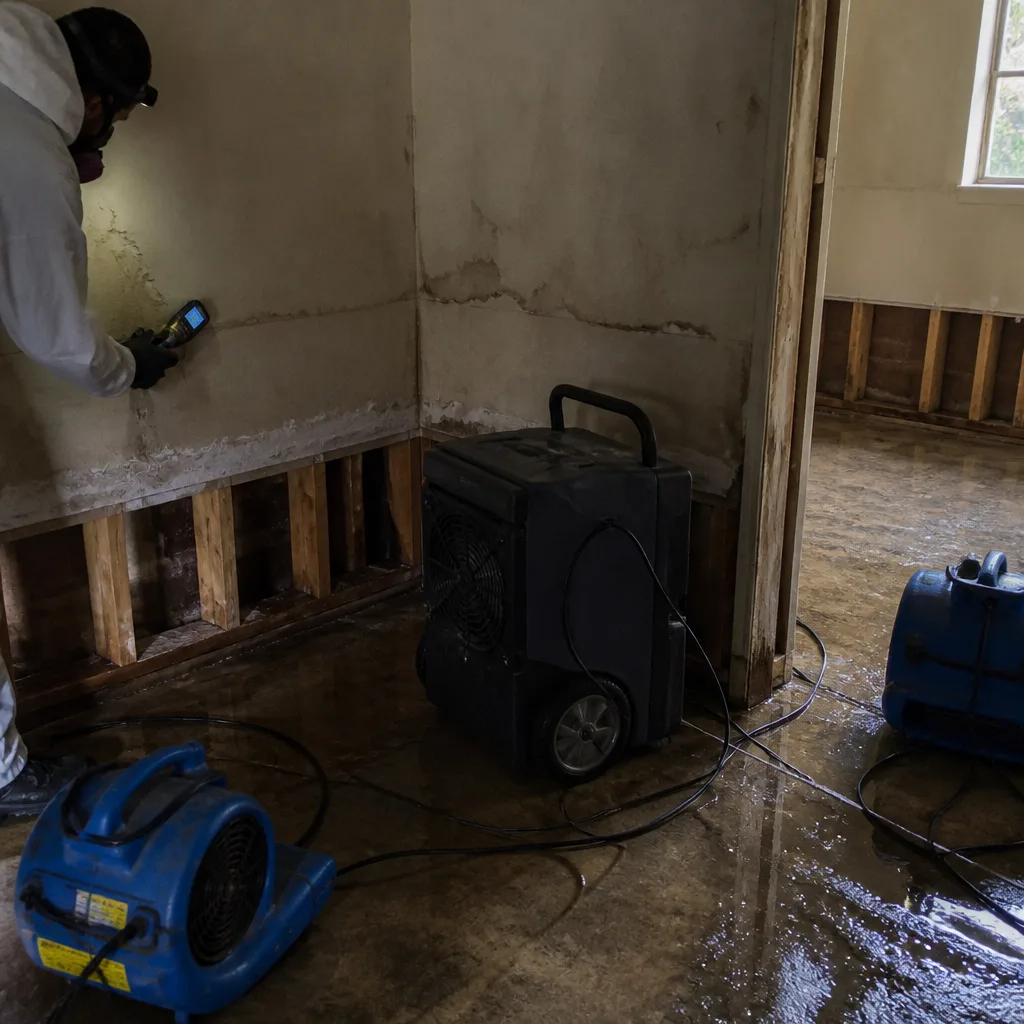 Before
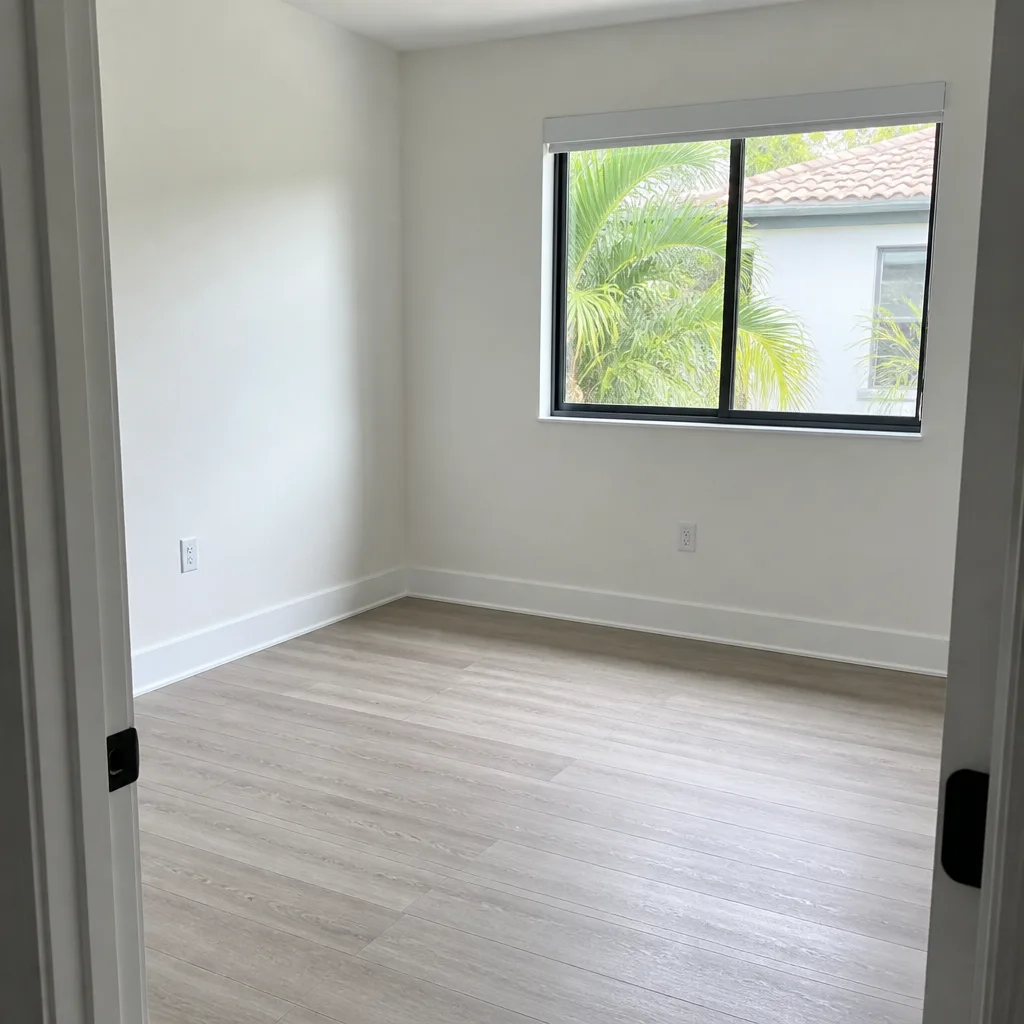 After
After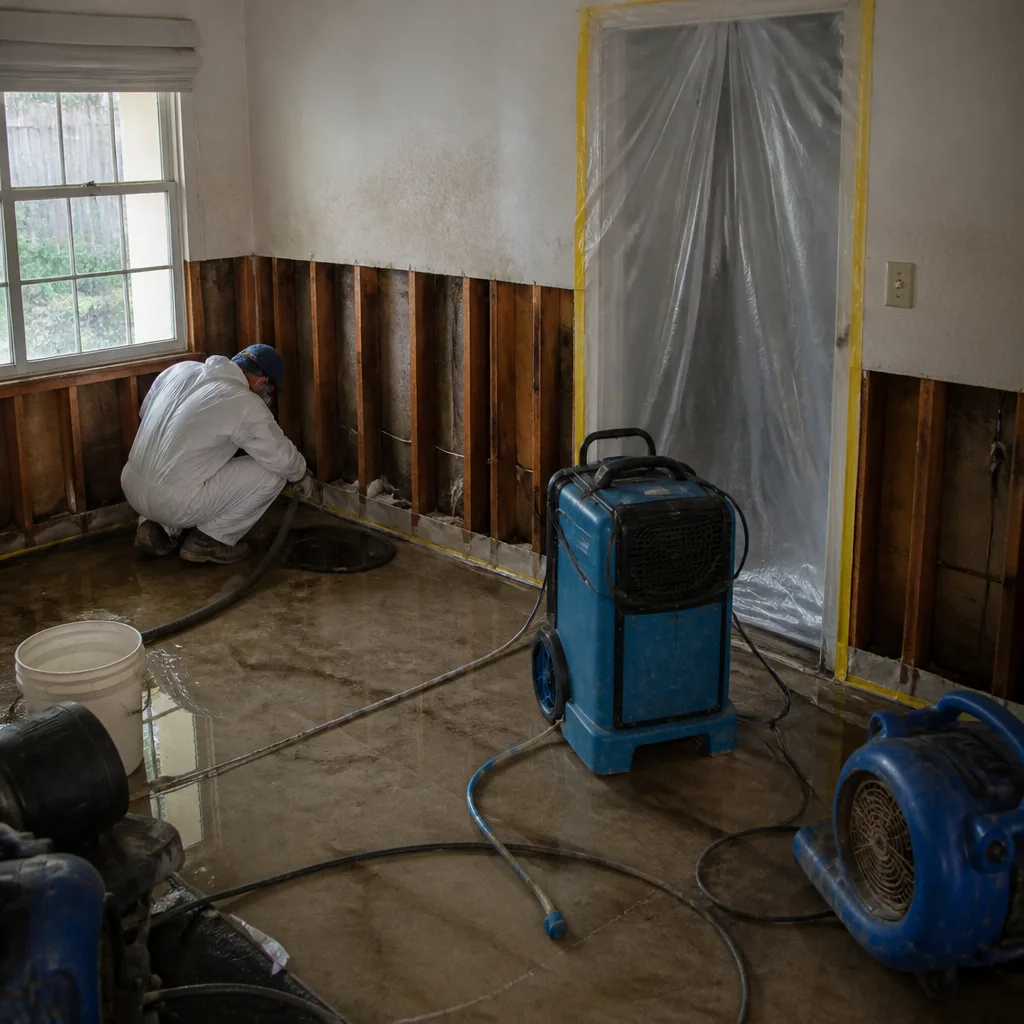 Before
 After
AfterCommon Mistakes to Avoid
- Waiting to see if it dries on its own. In Fort Lauderdale’s humidity, it won’t. The water will wick into materials and stay there. Every day you wait increases the drying time and the mold risk.
- Using a household vacuum on water. This creates an electrocution hazard and destroys the vacuum. Use a wet-dry vac if you’re doing any extraction at all.
- Spraying bleach on mold. Bleach is not an EPA-approved mold remediation solution. It drives mold deeper into porous surfaces and creates a respiratory hazard. If you see mold, you need containment and removal, not bleach.
- Pulling up carpet and padding without documenting. If you start demo before the restoration company or adjuster sees the damage, you’ve destroyed evidence that could have supported your claim. Document first. Then remove.
- Concealing the DIY work from your restoration company. The damage history matters. Tell the truth. You protect yourself by being transparent.
- Ignoring the source of the water. The spill is not the problem. The leak is the problem. If you don’t fix what caused the water, you’ll do this all over again, and the next time will be worse.
- Assuming insurance doesn’t cover restoration. Most Fort Lauderdale homeowner policies cover professional water mitigation and restoration. The cost of not using your coverage may be a denied claim for secondary damage later.
When to Call a Professional
Call a professional restoration company if any of these apply: the water is Category 2 or 3; the affected area is larger than 10 square feet; the water has been sitting more than 24 hours; the water has touched drywall, flooring, or framing; you plan to file an insurance claim; you see any sign of mold; you can smell a musty odor; you can’t identify the source of the water; or you simply don’t want to handle it yourself. You don’t need to be sure you need a professional. You just need to be unsure enough to ask. Marsh Water Damage Fort Lauderdale offers free estimates in Fort Lauderdale, and a live person answers our calls 24/7, including holidays. Call (754) 755-2815 and describe what you’re seeing. We’ll tell you honestly whether you need us or not.
Frequently Asked Questions
Most residential water extractions in Fort Lauderdale run between $1,500 and $4,500 before drying equipment is fully set, with larger losses costing more. Every Marsh Water Damage Fort Lauderdale job receives a written price before any work starts, so there are no ballooning surprises after demo begins. Call (754) 755-2815 for an exact quote, estimates are free.
You can dry small, clean-water spills under 10 square feet with fans and a rental dehumidifier if you catch them within 24 hours, but Fort Lauderdale’s high humidity makes rental units significantly less effective than commercial desiccant dehumidifiers. If water has touched drywall, flooring, or framing, fans and a rental unit will not remove moisture from inside the materials. Call us for a free assessment and we’ll tell you what we’d do, even if the answer is “you’re fine on your own.”
In most cases, yes. Standard Florida homeowner policies cover professional water mitigation, drying, and restoration, and Marsh Water Damage Fort Lauderdale works directly with your adjuster and bills insurance directly. The key is calling a restoration company early, before mold or secondary damage complicates the claim. Photo documentation is part of every job we do.
Visible mold can begin forming within 48 to 72 hours after water intrusion in Fort Lauderdale’s warm, humid climate, and hidden mold inside walls can be established within a week. This is the single biggest reason to address water damage immediately rather than waiting to see if it dries. If you suspect mold, call (754) 755-2815 for guidance on whether you’re looking at surface staining or a deeper problem.
Shut off the water source, cut electricity to the affected area if safe, move belongings off the floor, and begin removing standing water with towels or a wet-dry vac. Do not use a household vacuum, do not apply heat, and do not open walls or pull up flooring. Document everything with photos and video before you touch anything. Then call a professional restoration company.
When you call Marsh Water Damage Fort Lauderdale, a live person answers 24/7, and we dispatch same-day in most cases. Water damage gets worse every hour in this climate, so we prioritize emergency responses. The faster we arrive, the less drying time is needed and the lower the final cost tends to be. Call (754) 755-2815 and describe your situation.
Visible mold is almost always accompanied by hidden mold, because mold grows inside materials, not just on the surface. Cleaning visible mold without addressing the source and the hidden colony simply spreads spores and creates a false sense of safety. Mold remediation means containment, air scrubbing, removal of damaged material, and source correction. If you’re seeing mold in Fort Lauderdale, the Mold Remediation in Fort Lauderdale standard applies, and it starts with a honest assessment, not a bleach spray.
The Bottom Line
DIY water damage restoration works when the spill is small, clean, and caught immediately. That’s a narrow window in Fort Lauderdale, and the climate narrows it further. The line between “I can handle this” and “this needs a professional” is objective: more than 10 square feet, anything other than clean water, more than 24 hours, any contact with building materials, any plan to file an insurance claim. Cross that line and the restoration becomes a job for equipment, measurement, and documentation that most homeowners simply don’t have. The cost of being honest with yourself about that line is a phone call. The cost of not being honest is measured in mold, money, and months of your life.
Written by Tobias Reyner, Owner at Marsh Water Damage Fort Lauderdale, serving Fort Lauderdale since 2005.