
Last updated October 16, 2026
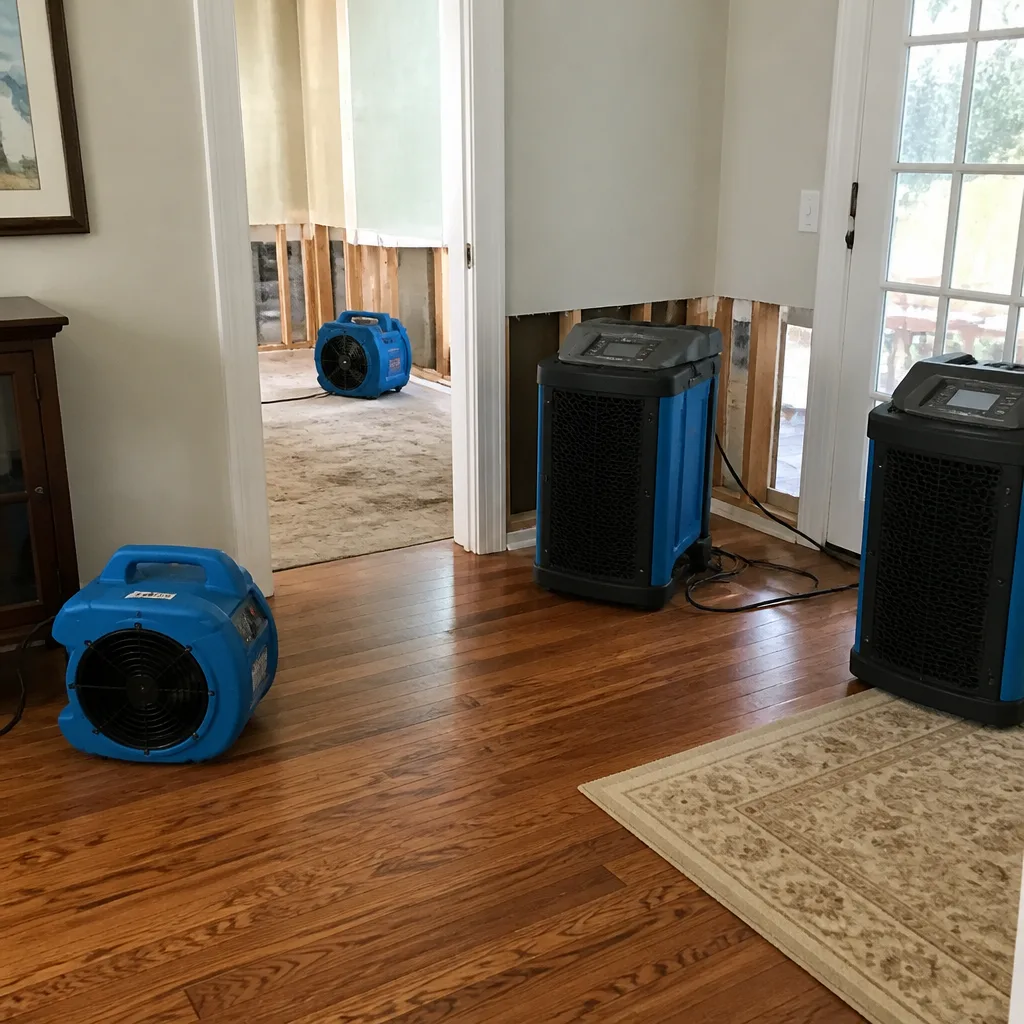 Water damage drying
 Fire & smoke cleanup
 Mold remediation
 Storm response
 Sewage cleanup
 Reconstruction
Free visual inspection and a written scope of work before any mitigation begins - photos, moisture readings, and drying logs go in your claim file
The scope we write is the scope we bill. Anything new gets shown to you, in writing, before we touch it.
Get your free estimateDamage Restoration Cost Breakdown: The Fort Lauderdale Homeowner’s Reference for 2026
Most Fort Lauderdale homeowners who call a restoration company have never hired one before. They’re standing in two inches of water or staring at a spreading ceiling stain, and the first quote they hear becomes their only reference point. Is $8,000 reasonable? Is $28,000 a rip-off? Contractors know you don’t know, and the ones who exploit that reality depend on your uncertainty. This guide removes that uncertainty. You’ll learn exactly how restoration pricing is structured in Fort Lauderdale, what legitimate cost drivers look like, what padding looks like, and how to read an estimate like someone who’s seen a hundred of them.
Quick Answer
Water damage restoration in Fort Lauderdale typically costs between $3.50 and $8.50 per square foot in 2026, depending on the IICRC water category, affected materials, and drying duration. A Category 1 clean water extraction on a 200-square-foot kitchen runs $1,200 to $3,500, while a Category 3 black water job on the same space can hit $8,000 to $15,000 once demolition, sanitizing, and reconstruction are included. Mold remediation adds $15 to $30 per square foot for affected areas, and storm damage restoration ranges from $4,000 to $40,000 depending on roof, window, and structural involvement.
Restoration work we handle
Table of Contents
- The IICRC Water Category System: Why the Same Room Can Cost $2,000 or $20,000
- Legitimate Cost Drivers vs. Padding: What Actually Moves the Price
- How Xactimate Works and How to Read an Estimate You’ve Never Seen Before
- The Real Cost of Delay: Why 72 Hours Changes Everything
- What a Written, Itemized Estimate Should Contain
- Mold Remediation Costs in Fort Lauderdale: A Separate Calculation
- Fort Lauderdale-Specific Cost Factors: Climate, Code, and Construction Style
- Common Mistakes to Avoid
The IICRC Water Category System: Why the Same Room Can Cost $2,000 or $20,000
The single biggest driver of restoration cost is something most homeowners have never heard of: the IICRC water category system. The IICRC (Institute of Inspection, Cleaning and Restoration Certification) classifies water damage into three categories, and each category multiplies per-square-foot costs dramatically. Here’s how it works in plain terms.
Category 1: Clean Water
Category 1 water comes from a sanitary source: a broken supply line under a sink, a failed water heater, an overflowing bathtub fed by municipal water. It’s wet, but it’s not contaminated. In Fort Lauderdale, Category 1 extraction and drying on a typical 500-square-foot living area runs $2,500 to $5,500 in 2026. This covers extraction, equipment setup (air movers and dehumidifiers from brands like Dri-Eaz and Phoenix), monitoring visits, and final moisture verification. No demolition is required in most cases if drying starts within 24 to 48 hours.
Category 2: Gray Water
Category 2 water contains significant contamination: washing machine overflow, dishwasher discharge, toilet overflow with urine but no feces. This water carries microorganisms and requires antimicrobial treatment after extraction. The same 500-square-foot space with Category 2 water runs $5,000 to $9,000 in Fort Lauderdale because porous materials like carpet pad and drywall baseboard absorb the contamination and often need removal before drying can even begin.
Category 3: Black Water
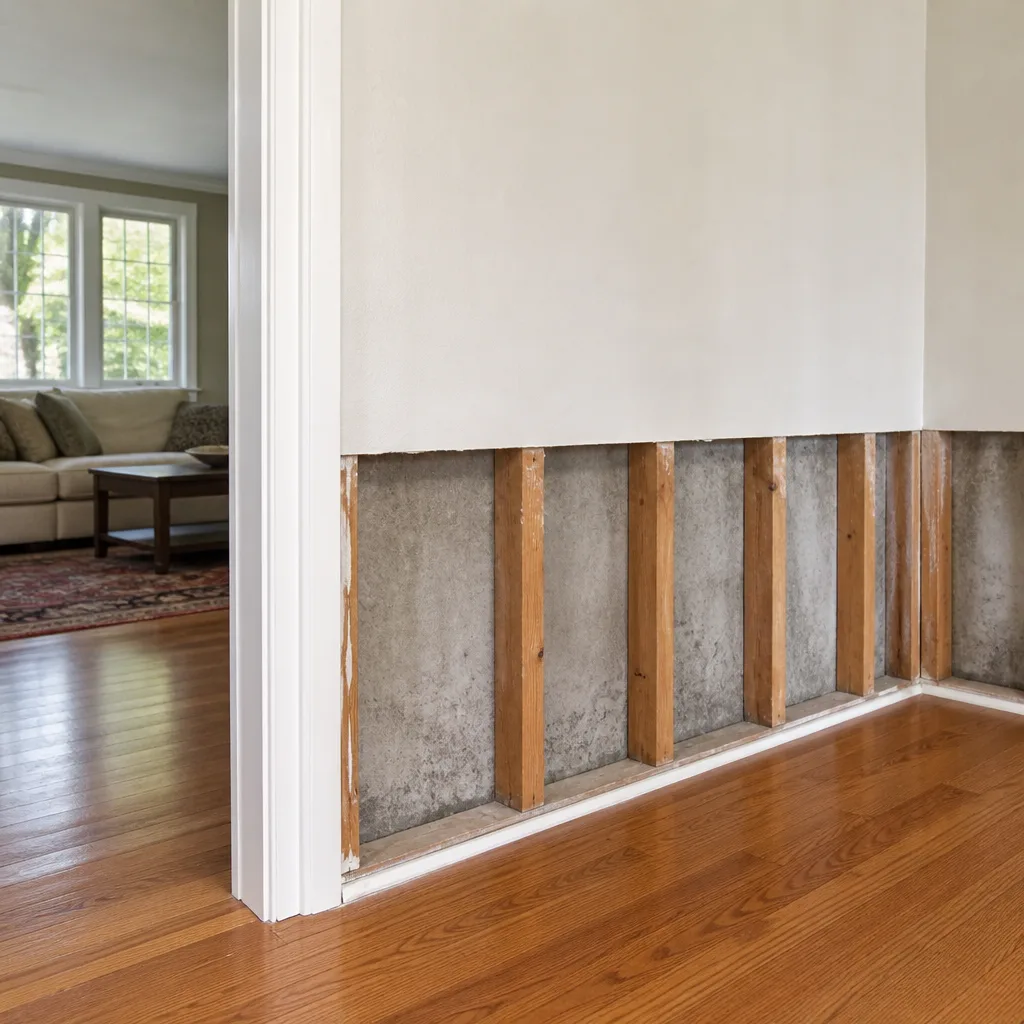
Category 3 is grossly contaminated: sewage backups, rising floodwater from canals or storm surge, seawater intrusion from coastal flooding. Fort Lauderdale’s canal systems and low-lying neighborhoods make Category 3 events common during hurricane season. Every porous surface that touched the water must come out. The same 500-square-foot space runs $8,000 to $18,000, and that’s before reconstruction. Drywall is cut 24 to 48 inches above the water line, flooring is removed, and an EPA-registered antimicrobial is applied to the remaining structure. This is not a scenario where you save money by waiting.
Legitimate Cost Drivers vs. Padding: What Actually Moves the Price
You can’t evaluate a restoration quote without knowing what legitimately increases cost and what’s line-item filler. Here’s the honest list from the Fort Lauderdale market.
Legitimate Cost Drivers
- Drying duration: Every day of drying equipment rental adds $150 to $400 per day depending on the number of air movers and dehumidifiers. A three-day dry is $450 to $1,200. A seven-day dry is three times that. Drying duration is driven by humidity, material porosity, and how fast mitigation started. Fort Lauderdale’s average 74% humidity year-round means drying takes longer here than in drier climates.
- Material porosity: Hardwood floors (a feature in many Fort Lauderdale homes built before 1970) are faster to dry than engineered wood or laminate, which trap moisture between layers and often require removal. Travertine tile (common in Fort Lauderdale ranch homes) dries fast but has grout lines that wick moisture into the slab.
- Mold presence: If microbial growth is already visible when restoration begins, a standard water job becomes a mold remediation job, adding containment, air filtration, and disposal costs that can double the total.
- Structural involvement: Water that saturates drywall, studs, subfloor, and sill plates requires structural drying, which means more equipment, longer monitoring, and sometimes targeted demolition. This is real cost, not padding.
Padding in Disguise
- “Emergency service” fees that disappear if you ask: Legitimate companies don’t charge an emergency fee for 24-hour response. It’s built into the unit pricing. A separate $500 “emergency dispatch” line is usually negotiable and often disappears when questioned.
- Equipment days you never saw: An itemized bill should list equipment count and daily rate. If the invoice says “10 air movers for 7 days” but you only ever counted six in your house, you’re paying for phantom equipment. Photograph everything before demo begins.
- Mold testing without a mold problem: Air sampling before any visible mold is confirmed is unnecessary in most cases. If mold is visible, remediation is required regardless of test results. Testing is legitimate after remediation to verify clearance, not before.
Marsh Water Damage Fort Lauderdale’s written pricing policy exists because of this exact ambiguity. Every job gets a written price before any work begins, not after demo exposes “unexpected” issues. The price reflects the scope we agree to, and the scope is based on what we can see and measure: moisture readings, category classification, and square footage. You can find more detail on our Water Damage Restoration in Fort Lauderdale page.
How Xactimate Works and How to Read an Estimate You’ve Never Seen Before
Most Fort Lauderdale restoration contractors price jobs using Xactimate, a software platform used by insurance adjusters nationwide. It’s essentially a pricing database of construction and restoration line items with regional cost adjustments. Here’s what you need to know about it.
Xactimate assigns unit prices to specific tasks: extraction at $X per square foot, demolition at $X per linear foot, dehumidifier rental at $X per day. These prices are updated quarterly and adjusted by ZIP code. Fort Lauderdale’s Xactimate pricing reflects South Florida labor rates and material costs, which are moderately higher than national averages.
When you receive an Xactimate estimate, you’ll see a numbered list of line items, each with a quantity, unit cost, and total. Here’s how to read one without prior experience:
- Find the square footage. The first line item is usually “Water extraction – Category X” priced per square foot. Multiply the square footage by your home’s actual affected area. If the estimate says 1,200 square feet and your affected area is 800, that’s a red flag.
- Check the equipment days. Look for “Air mover – per day” and “Dehumidifier – per day” lines. Each should show a count and a number of days. Compare that to what you saw in your home.
- Look for the drying log. Legitimate companies attach a psychrometric drying log to the final invoice: daily readings of temperature, relative humidity, and moisture content. This is how the industry proves the structure is actually dry, not just dry on the surface. No drying log, no basis for the equipment days billed.
- Scan for “general contractor overhead and profit.” Xactimate adds roughly 10% overhead and 10% profit to repair estimates. This is standard and legitimate, but you should see it as a line item, not buried in unit costs.
One note: Xactimate pricing assumes industry-standard methods and materials. A contractor can use Xactimate and still overcharge if they inflate quantities. The pricing system is honest; the operator might not be. That’s why we give Fort Lauderdale homeowners a written price based on the same line-item structure they can cross-check against industry benchmarks.
The Real Cost of Delay: Why 72 Hours Changes Everything
Here’s the number that should keep every Fort Lauderdale homeowner up at night: a $2,000 water extraction job becomes a $15,000 mold remediation project if it sits for 72 hours. We’ve seen this exact scenario dozens of times in the city’s older neighborhoods.
Consider a typical case. A supply line bursts under a kitchen sink in a Coral Ridge home one evening. The homeowner turns off the valve, mops up the visible water, and decides to “let it dry out” for a few days before calling anyone. Here’s the timeline that follows:
Hour 1: Water spreads under the cabinets, into the drywall cavity, and under the tile flooring. Invisible.
Hours 12 to 24: Drywall wicks moisture upward, baseboards swell, and the underlayment beneath the tile begins saturating. The affected area doubles.
Hours 48 to 72: In Fort Lauderdale’s average 74% humidity and 75 to 85 degree indoor temperatures, mold spores germinate and begin colonizing organic materials: paper backing on drywall, wood studs, carpet padding. This is biological multiplication, not a vague “mold issue.”
Day 4 and beyond: Visible mold appears. The job is no longer water extraction with drying. It’s mold remediation with containment, negative air pressure, HEPA filtration, antimicrobial application, and removal of all colonized materials. The $2,000 job is now $12,000 to $18,000, and reconstruction hasn’t even started.
The cost of delay in Fort Lauderdale is real and measured in dollars per hour. A Category 1 extraction on the day of the event is typically $1,200 to $3,500 for a single room. The same room after mold colonization is $8,000 to $15,000 for remediation alone. The difference is the 72-hour window.
This is exactly why we answer the phone with a live person 24 hours a day, including holidays. The call you make at 11 PM Sunday costs you nothing. The call you don’t make until Thursday costs you thousands. If you’re dealing with water right now, call us at (754) 755-2815 and start the clock going the other direction.
What a Written, Itemized Estimate Should Contain
One of the strongest protections a Fort Lauderdale homeowner can have is a written, itemized estimate that lists every component of the job in detail. Here’s what separates a real estimate from a number written on a napkin.
- Category classification. The estimate should state which IICRC water category applies and why. If it says “Category 2” but your water came from a clean supply line, ask why.
- Square footage breakdown. Affected area should be measured and listed. Not estimated. Measured. A laser-measured drawing attached to the estimate is a sign of a company that builds defensible pricing.
- Unit costs for every line item. Extraction at $X per square foot, demolition at $X per linear foot, equipment at $X per day. No lump-sum “mitigation package” without a breakdown.
- Equipment count and duration. How many air movers, how many dehumidifiers, and for how many days. Each line should show count, daily rate, and number of days.
- Labor hours. Crew size and hourly rate or day rate. Labor is typically 30 to 40% of a restoration bill, and you should see it explicitly.
- Antimicrobial and sanitizing line items. For Category 2 and 3 jobs, this should be a dedicated line item with the product or class of product named.
- Containment and disposal fees. If the job requires containment (plastic sheeting, negative air machines) or debris disposal, those fees should be itemized separately.
Every Marsh Water Damage Fort Lauderdale job receives a written, itemized estimate before any work begins. The price you see is the price you pay, and the scope is agreed to in writing. This isn’t a feature; it’s the baseline. Our Marsh Water Damage Fort Lauderdale home page explains the process in more detail.
Mold Remediation Costs in Fort Lauderdale: A Separate Calculation
Mold remediation in Fort Lauderdale follows a different cost structure than water extraction. The work is more contained, more regulated, and more expensive per square foot. Here’s the 2026 breakdown.
Standard mold remediation runs $15 to $30 per square foot of visibly affected area. A typical Fort Lauderdale bathroom mold problem (30 to 60 square feet) costs $800 to $2,500. A closet or ceiling cavity with 100 square feet of visible growth runs $2,000 to $4,500. Larger infestations that spread into HVAC ductwork or behind multiple walls can hit $10,000 to $30,000 depending on the scope of containment and material removal.
The key differentiator in mold pricing is the containment protocol. Legitimate remediation includes:
- Plastic sheeting and negative air pressure to prevent cross-contamination
- HEPA air filtration running continuously during the work
- Removal of colonized materials (drywall, insulation, carpet) bagged and sealed before leaving the work area
- EPA-registered antimicrobial application to remaining structural surfaces
- Post-remediation clearance testing (air sampling or surface swabs) by a third party
If a Fort Lauderdale remediation quote doesn’t include containment and clearance testing, it’s not a remediation quote. It’s a cleaning with a higher price tag. Our Mold Remediation in Fort Lauderdale page details our process, including the psychrometric readings (measuring the moisture in the air) that confirm the structure is genuinely dry before we close a job.
Fort Lauderdale-Specific Cost Factors: Climate, Code, and Construction Style
Fort Lauderdale restoration pricing differs from national averages for reasons that have nothing to do with contractor honesty and everything to do with where you live.
First, the humidity. Fort Lauderdale averages 74% relative humidity, and during the May through October wet season, that number climbs into the high 70s and low 80s. High ambient humidity means drying equipment works harder and longer. A three-day dry in Phoenix might be a five-day dry here. That’s legitimate additional equipment cost, not padding.
Second, the construction stock. Fort Lauderdale has a mix of mid-century concrete block homes (common in neighborhoods like Victoria Park, Rio Vista, and Shady Banks), newer wood-frame construction (common in western Fort Lauderdale and Davie), and some elevated coastal properties built to modern wind codes. Concrete block homes don’t rot, but they hold moisture in the slab and wick it through grout lines. Wood frame homes dry faster but are more vulnerable to structural saturation. An honest estimate accounts for the difference.
Third, Fort Lauderdale building code. Work that touches structural elements (studs, subfloor, roof decking) requires permits and inspections, which add $500 to $2,000 to a job depending on scope. Some contractors skip permits to keep quotes low. That’s a trap. Unpermitted work can create disclosure problems when you sell and can void insurance coverage on the repaired area.
Fourth, storm-driven demand. During the Atlantic hurricane season (June through November), Fort Lauderdale restoration companies are at capacity. Prices rise during surge demand after a named storm, not because of gouging, but because equipment rental rates, materials, and labor all tighten simultaneously. If you’re reading this during hurricane season, factor a 15 to 25% demand premium into any quote you receive.
Our Storm Damage Restoration in Fort Lauderdale page covers the post-storm process in detail, including what to document for insurance before any work begins.
Common Mistakes to Avoid
- Accepting a verbal quote. Any restoration contractor in Fort Lauderdale who won’t put a price in writing before starting work is telling you something about how they’ll handle changes after demo begins. Insist on a written, itemized estimate. We provide one automatically.
- Waiting to call because you’re not sure it’s “bad enough.” Water that sits for 48 hours in Fort Lauderdale humidity will develop mold. The call costs nothing. The delay costs thousands. Call a live person at (754) 755-2815 and get a professional read on the situation.
- Not photographing everything before cleanup begins. Insurance claims live and die on documentation. Photograph every affected area, every damaged item, and every piece of equipment the restoration company brings in. Your adjuster will ask for it.
- Signing an assignment of benefits without reading it. Florida AOB abuse has been a documented problem. Read what rights you’re signing away. A legitimate Fort Lauderdale restoration company can work with your insurer without taking ownership of your claim.
- Skipping the drying log. At the end of a water job, ask for the psychrometric drying log: the daily moisture readings that prove the structure is dry. No readings, no proof. Reputable companies keep these logs for every job.
- Choosing the cheapest quote without comparing scope. A $3,000 quote that skips containment, antimicrobial, and equipment monitoring is more expensive than a $6,000 quote that does the job completely. Compare line items, not bottom lines.
- Assuming insurance covers everything. Your policy has a deductible, and it may exclude certain categories of water damage (gradual leaks, some storm surge scenarios). Know what your policy says before you assume the adjuster will write the check.
See the difference
 Before
 After
After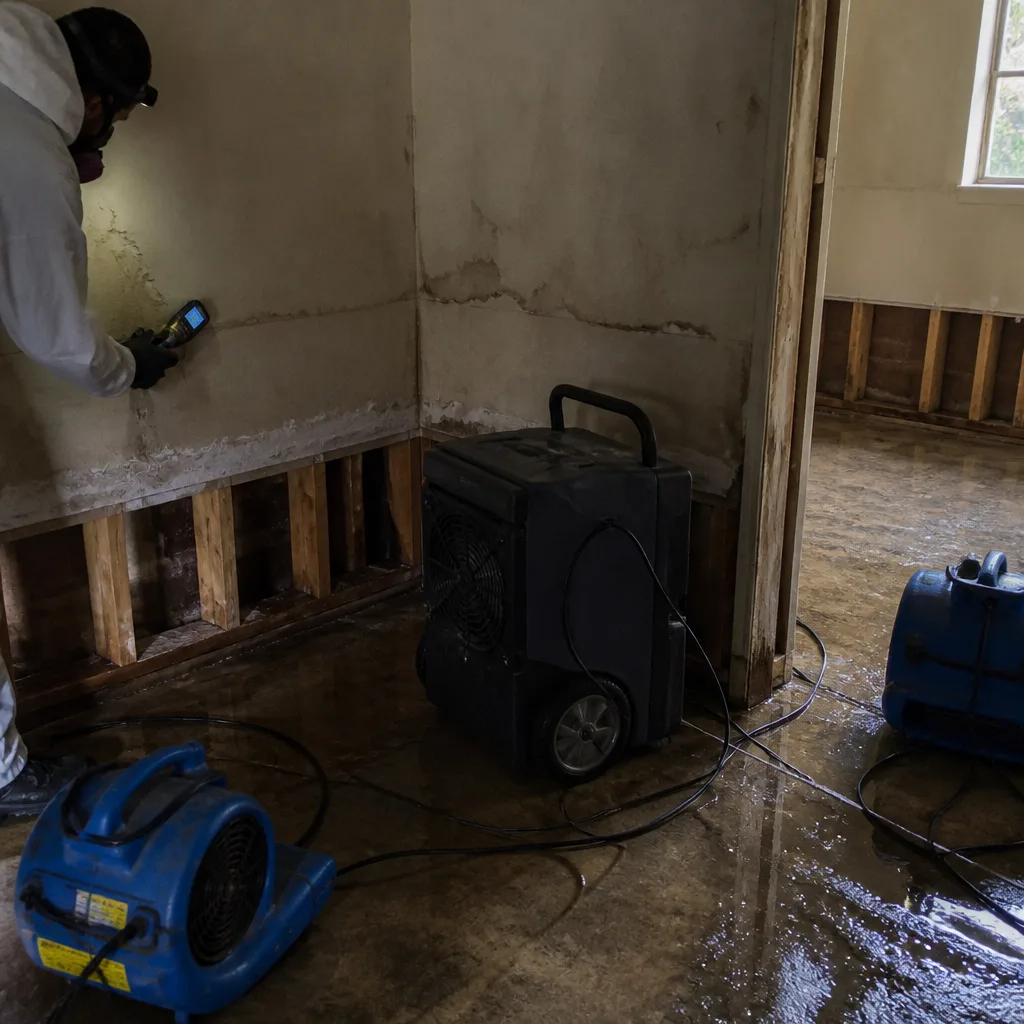 Before
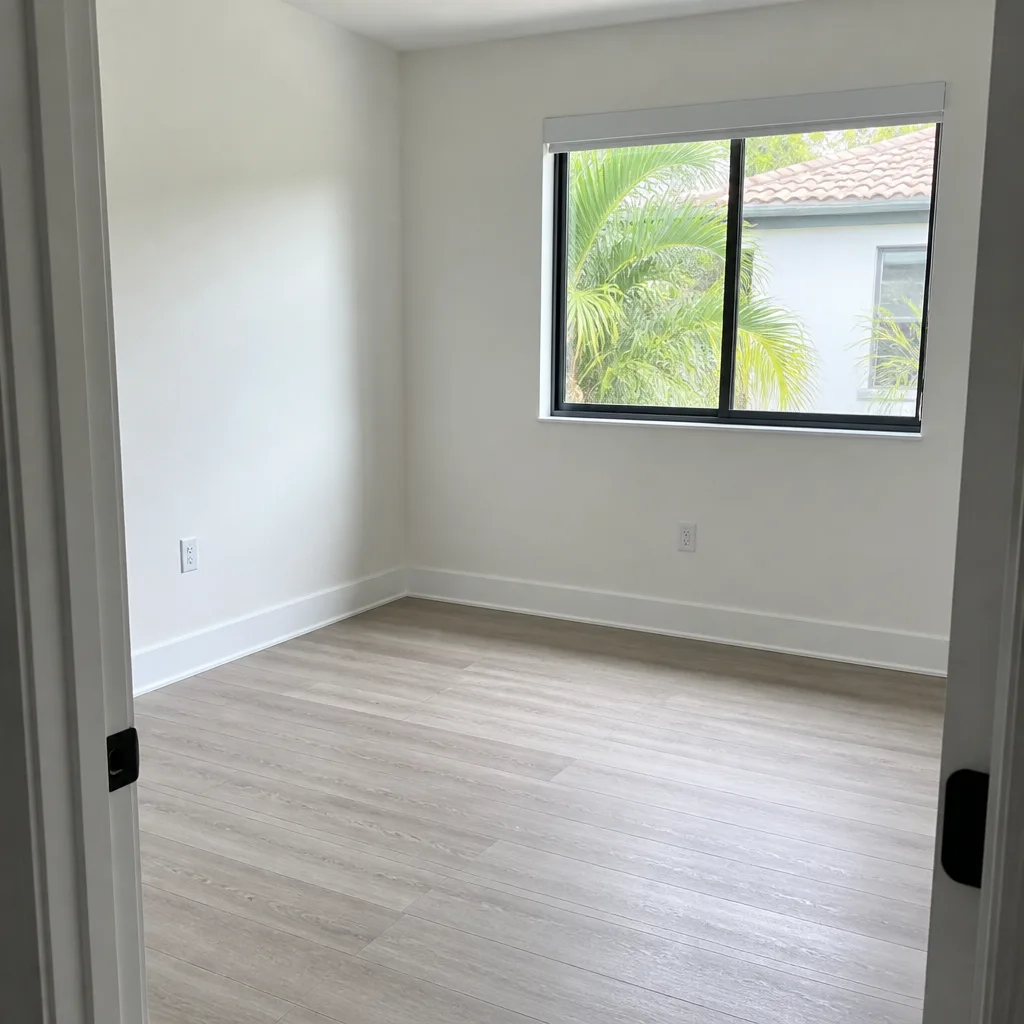 After
After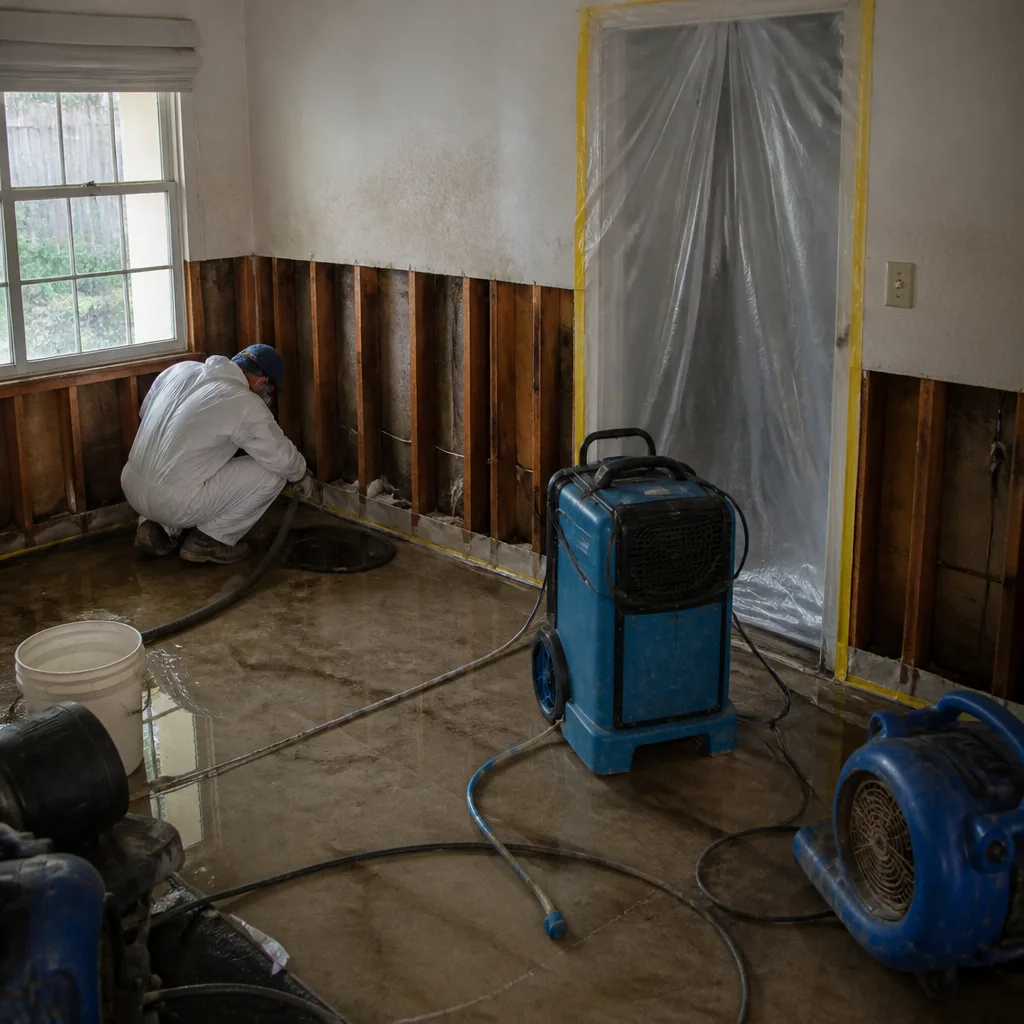 Before
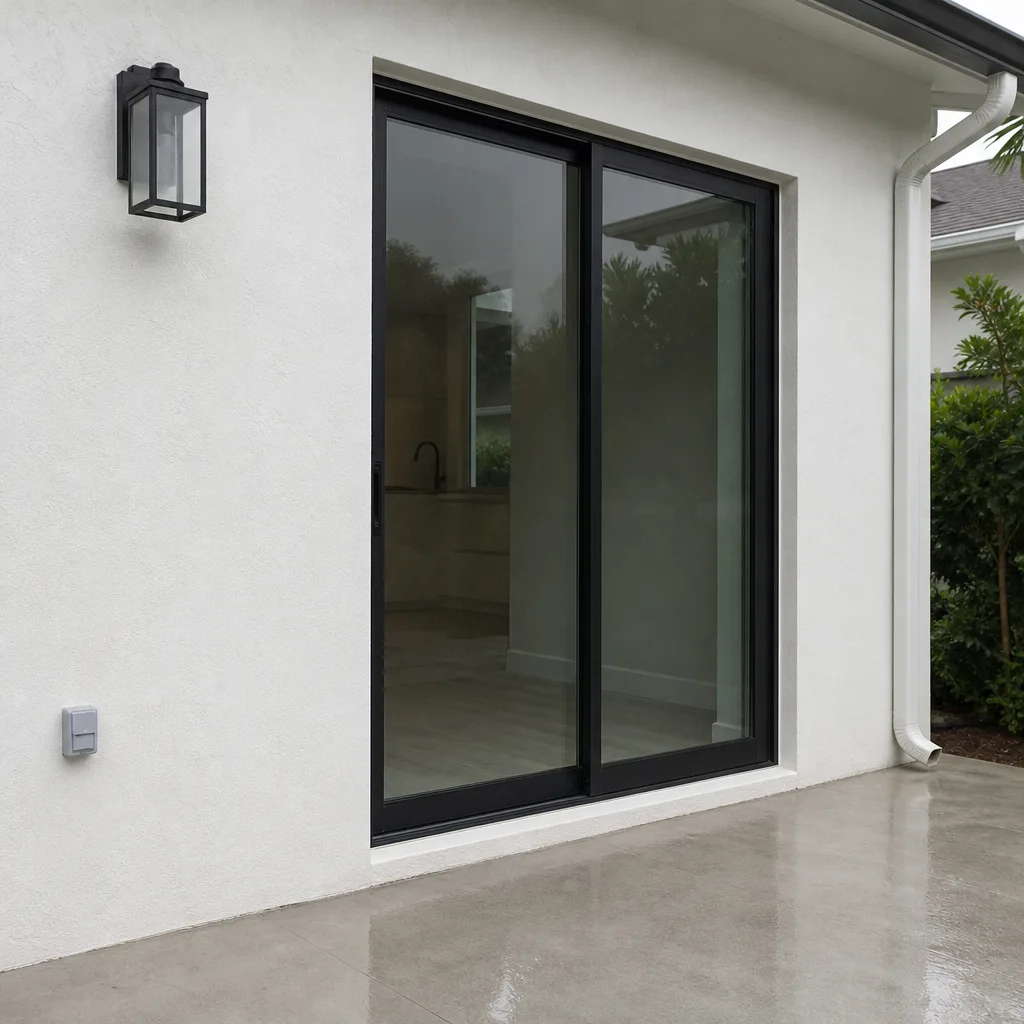 After
AfterWhen to Call a Professional
Call a professional restoration company in Fort Lauderdale immediately if you have a Category 2 or 3 water event (gray or black water), if water has affected drywall or flooring in more than one room, if you see visible mold of any size, if water has been sitting for more than 24 hours, or if you smell a musty odor that won’t go away. These scenarios require professional equipment and methods, not a shop vac and a dehumidifier from Home Depot-see our DIY vs Professional Damage Restoration: The Fort Lauderdale Homeowner’s Decision Guide for why. Marsh Water Damage Fort Lauderdale offers free estimates in Fort Lauderdale: call (754) 755-2815 and a live person will answer, day or night, including holidays.
Frequently Asked Questions
Water damage restoration in Fort Lauderdale runs $3.50 to $8.50 per square foot in 2026, depending on water category and drying complexity. A single-room Category 1 job typically costs $1,200 to $3,500, a Category 3 sewage backup on the same room runs $8,000 to $15,000 including demolition and sanitizing. Call (754) 755-2815 for an exact quote based on your specific situation; estimates are free.
Most Fort Lauderdale homeowners policies cover sudden and accidental water damage from burst pipes, water heater failures, and appliance malfunctions, minus your deductible. Gradual leaks (a slow drip that’s been going for weeks) and some storm surge scenarios may be excluded or require separate coverage. We document every job with photos and psychrometric data and coordinate directly with your adjuster so the claim is supported from the first visit.
Marsh Water Damage Fort Lauderdale answers calls with a live person 24/7 and can typically dispatch a crew to most Fort Lauderdale neighborhoods the same day, including evenings and weekends. Water damage waits for no one, and neither should your response. The 72-hour mold clock starts the moment the water sits.
If visible mold covers more than 10 square feet, or if it’s behind walls, in HVAC ductwork, or in structural cavities, you need full remediation with containment and clearance testing, not a surface cleaning. Surface cleaning on a larger infestation leaves spores in the air and behind surfaces, and the mold returns. A proper Fort Lauderdale mold inspection determines which situation you have.
You do, with our support. Marsh Water Damage Fort Lauderdale provides photo documentation, written moisture readings, and line-item estimates in Xactimate format that adjusters recognize, but the claim itself is yours. We never ask you to sign an assignment of benefits that hands your claim to us. We work alongside your adjuster so you stay in control of your policy.
Two things: the Threshold Verified safety standard and a written-price policy on every job. Every technician who arrives at your door has been background-checked, identity-verified, and sent to you by name and photo before the visit, then shows a photo ID badge at the door. And every job gets a written price and a written 365-Day Done Right Promise before we start work, not after.
The Bottom Line
Restoration pricing in Fort Lauderdale is not random, and it’s not a mystery. It follows a structure built on water category, affected square footage, material type, and drying duration. Once you understand that structure, you can read any estimate and spot padding from half a mile away. The homeowners who get overcharged are the ones who don’t know what the line items mean. You now know. And if you don’t want to navigate the numbers alone, we’ll send a background-checked, photo-badged technician to your door with a written price in hand, and a 365-day promise that the repair stays repaired. For more guides & resources, explore our blog.
Written by Tobias Reyner, Owner at Marsh Water Damage Fort Lauderdale, serving Fort Lauderdale since 2005.