
Last updated October 16, 2026
 Water damage drying
 Fire & smoke cleanup
 Mold remediation
 Storm response
 Sewage cleanup
 Reconstruction
Free visual inspection and a written scope of work before any mitigation begins - photos, moisture readings, and drying logs go in your claim file
The scope we write is the scope we bill. Anything new gets shown to you, in writing, before we touch it.
Get your free estimateThe Complete Guide to Damage Restoration in Fort Lauderdale
The average Fort Lauderdale home sits at 70 to 80 percent indoor humidity even on a perfectly dry day. That means water soaking into drywall after a pipe burst or a storm surge doesn’t need any help staying wet. It needs help leaving, fast, and most restoration checklists skip the science of how that actually happens. This guide is built for Fort Lauderdale homeowners who want to understand the full restoration process before they’re standing in two inches of water at 2 a.m., trying to decide who to call and what to do first.
Restoration work we handle
Quick Answer
Damage restoration in Fort Lauderdale means removing the water, drying the structure completely using controlled temperature, humidity, and airflow, then repairing or rebuilding what the water destroyed. The process should follow a strict sequence: stop the water source, extract standing water, verify hidden moisture is gone, and only then rebuild. The single most important deadline is not your insurance adjuster’s visit or a contractor’s schedule. It’s the 72-hour window before wet organic material becomes a mold colony, and Fort Lauderdale’s climate often compresses that window even further.
Table of Contents
- Why Fort Lauderdale Is Different From Every Other Restoration Market
- The 72-Hour Window: The Only Deadline That Matters
- The Correct Sequence of Restoration (And the Mistake Most People Make)
- What Psychrometric Drying Actually Means (It’s Not Just Running Fans)
- How to Read a Restoration Scope of Work
- What Damage Restoration Costs in Fort Lauderdale
- Written Guarantees and Price Commitments: Why They Matter in Broward County
- Common Mistakes to Avoid
- When to Call a Professional
- Frequently Asked Questions
- The Bottom Line
Why Fort Lauderdale Is Different From Every Other Restoration Market
Restoration in Fort Lauderdale is not the same job as restoration in Orlando, Atlanta, or Phoenix. The moisture load here is relentless. The city sits on flat, low ground between the Everglades and the Atlantic. The water table is high. The air is humid year-round, reaching saturation levels during the summer wet season that runs from May through October. When our team gets called to a home in Victoria Park or Coral Ridge, we already know the ambient conditions inside are working against us before we even open the door.
That’s because moisture in the air doesn’t just sit there. It actively competes with your dehumidifiers and fans. When the indoor humidity outside the wet area reads 75 percent, the air cannot absorb much additional water evaporating from your drywall, baseboards, and subfloor. The drying process stalls. In a dry climate like Denver, a wet wall might air-dry on its own in days. In Fort Lauderdale, that wall can stay damp for weeks, and damp weeks are exactly when mold takes hold.
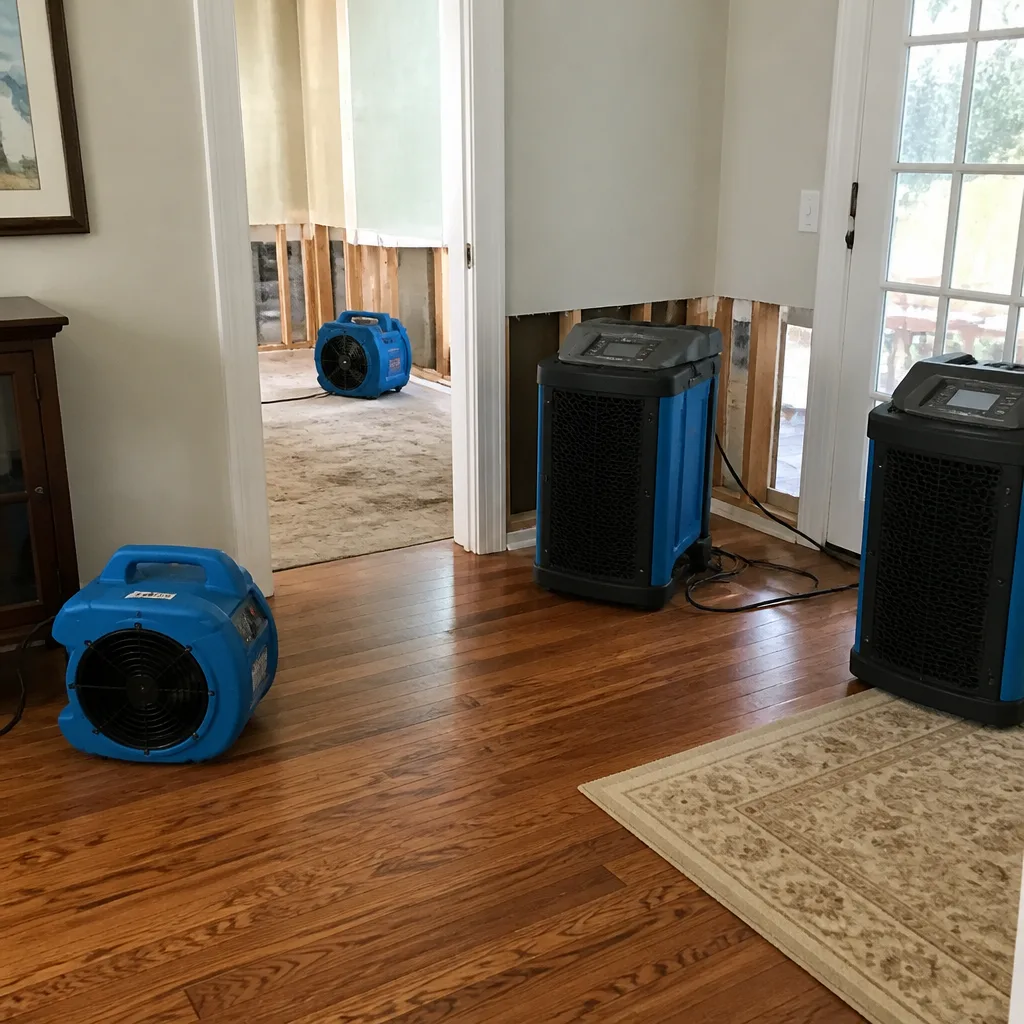
This is why the equipment matters as much as the labor. We run commercial-grade extraction and drying systems from Dri-Eaz and Phoenix, the same models used on large commercial losses, because residential equipment simply isn’t sized for this climate’s moisture load. A homeowner who rents a couple of box fans from a hardware store is fighting Fort Lauderdale’s atmosphere with tools that were never designed to win that fight. The structure needs mechanical help to dry correctly, and that help has to be matched to the specific conditions of the room, the materials, and the weather outside. For a deeper look at how this works in practice, see our full guide on Water Damage Restoration in Fort Lauderdale.
The 72-Hour Window: The Only Deadline That Matters
The insurance adjuster’s visit matters. The contractor’s schedule matters. But neither one is the real deadline. The real deadline is the 72-hour mark from the moment water first touches organic building material. Drywall, wood studs, baseboards, carpet padding, and even the paper backing on insulation are organic materials. When they stay wet for 72 hours or longer, dormant mold spores that already exist in every home begin to germinate and form active colonies. Once that happens, you no longer have a water damage job. You have a mold remediation job layered on top of a water damage job, and the cost and scope both jump significantly.
In Fort Lauderdale, that window often compresses. The 72-hour figure assumes standard indoor conditions of roughly 50 percent humidity and 70 degrees Fahrenheit. Your home, in August, is nowhere close to that. When indoor temperatures sit in the 80s and humidity climbs above 70 percent, mold can begin colonizing wet drywall in as little as 24 to 48 hours. We’ve pulled baseboards in homes near the New River where visible mold was already forming before the homeowner had even finished filing the insurance claim. That’s not an exaggeration. This climate moves faster than the national damage restoration industry often admits.
What this means for you is simple: speed matters, but it has to be informed speed. Calling a restoration company at 3 a.m. is the right move. Calling a company that shows up, vacuums up the standing water, and then tells you to “let it dry out” is the wrong move, because you just spent money on extraction without addressing the moisture hidden inside the wall cavity and under the floor. The right company arrives with the right equipment, takes moisture readings from the structure itself, and documents those readings so you know exactly when the drying is complete. If you’re dealing with mold that’s already present, our approach is covered in detail on the Mold Remediation in Fort Lauderdale page.
The Correct Sequence of Restoration (And the Mistake Most People Make)
The single most common mistake we see in Fort Lauderdale homes is rebuilding before drying is confirmed complete. A homeowner notices water damage on a Tuesday, calls a contractor on Wednesday, and by Friday someone is installing new drywall over a wall cavity that still reads 18 percent moisture content. The new drywall looks fine for a month. Then the paint starts bubbling, a musty smell appears, and the homeowner is paying for the same wall twice.
The correct sequence exists for a reason. Every step depends on the step before it, and skipping any step guarantees problems downstream.
- Stop the source. If a pipe is still leaking, a roof is still open, or a supply line is still dripping, nothing else matters. The water has to stop entering the structure before extraction can work. This sometimes means shutting off the main water valve to the home or, in storm scenarios, tarping the roof opening.
- Extract standing water. This is the step most people understand. Truck-mounted or portable extraction units pull the bulk water out of carpets, hard surfaces, and subfloor cavities. The goal is to remove everything that can be removed by physical suction, not evaporation.
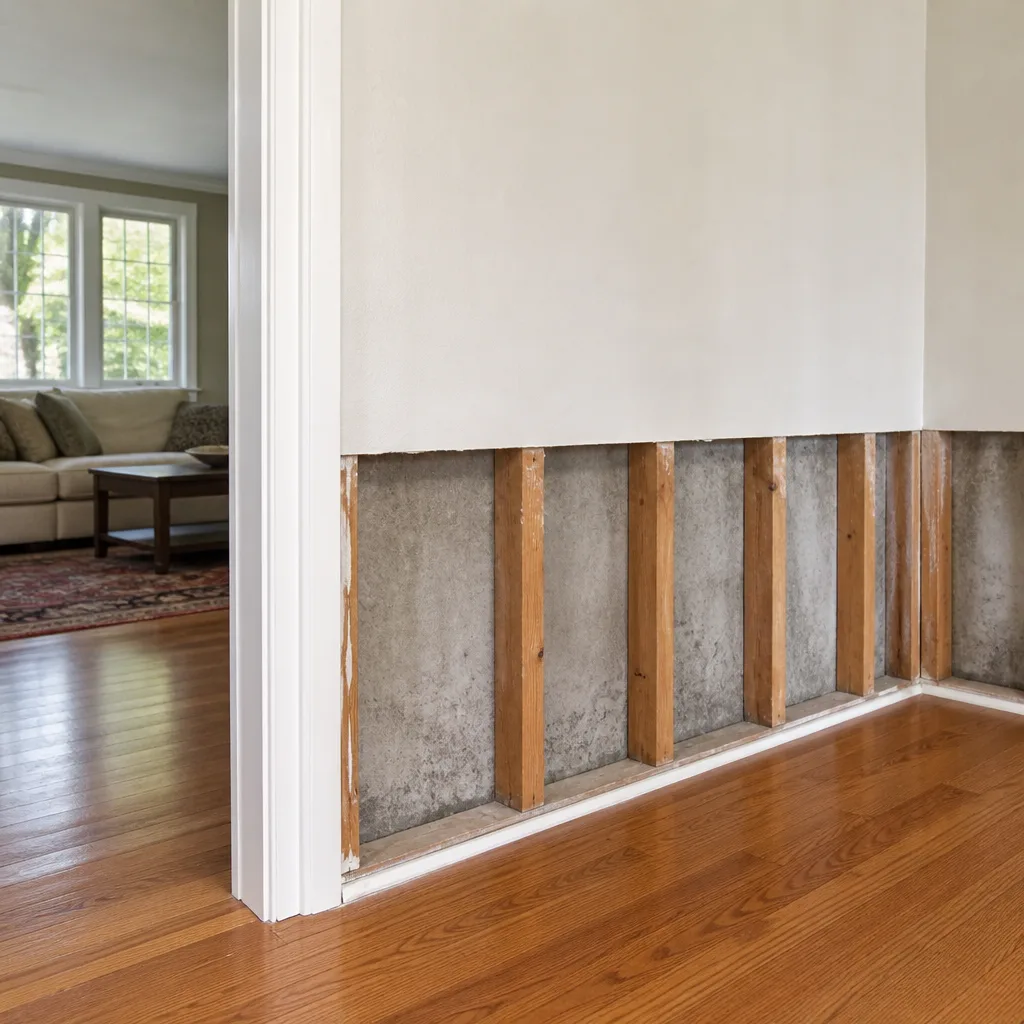
- Remove unsalvageable materials. Carpet padding is almost always unsalvageable. Drywall that has wicked water more than a foot above the floor line is usually not worth saving. Baseboards, cabinet toe-kicks, and laminate flooring that has swollen are damage that has to go. The salvageability decision is made by a technician who understands construction materials, not by a homeowner guessing at what can be saved.
- Structural drying. This is the phase where psychrometric science does the work. We explain that in the next section. What matters here is that this phase continues until the structure is actually dry, verified by moisture meters and humidity readings, not until the surface feels dry to the touch.
- Verify dryness. Moisture readings are taken from the structural materials themselves: the drywall, the studs behind the drywall, the subfloor, the bottom plate of the wall. Each material has a target moisture content. When all materials are at or below those targets, drying is complete.
- Rebuild. Only now, with a verified-dry structure, does reconstruction begin. New drywall goes up over dry studs. New flooring goes down over a dry subfloor. The rebuild is the final step, never the first one.
Most Fort Lauderdale homeowners fail at this process because they jump from step 2 to step 6. They extract the standing water and then rebuild immediately, skipping the drying and verification phases entirely. That’s how mold ends up behind brand-new drywall. That’s how a $3,000 water job becomes a $15,000 mold and structural job twelve months later.
What Psychrometric Drying Actually Means (It’s Not Just Running Fans)
The word psychrometric sounds like jargon, but it’s actually a plain concept with a complicated name. It means understanding the relationship between temperature, humidity, and airflow to pull moisture out of building materials as efficiently as possible. It’s the difference between putting a fan in a room and engineering the conditions that force water molecules to move from your walls back into the air, where a dehumidifier can capture and remove them.
Here’s the plain-English version. Evaporation happens when the air touching a wet surface can absorb water. Warm air absorbs more water than cool air. Dry air absorbs more water than humid air. Moving air absorbs more water than still air. Psychrometric drying is the process of measuring all three of those variables, then adjusting the equipment until the conditions are optimal for evaporation without causing secondary damage like warped wood or cracked plaster.
In a typical Fort Lauderdale drying job, that means setting up containment barriers around the wet area, positioning air movers to create airflow across every wet surface, and running a dehumidifier sized to remove the amount of water being evaporated each day. But it also means reading the air with a thermo-hygrometer before anything is plugged in, so we know what we’re working with. Psychrometric readings (measuring the moisture in the air) tell us when the structure is genuinely dry, not just dry on the surface.
Blowing air across a wet wall without a dehumidifier running is worse than doing nothing in this climate. The fan evaporates water into the air, the humidity in the room climbs, and the air stops absorbing moisture, which means the wall stays wet. But now the moisture is also floating through the rest of the house, finding other porous materials to settle into. A proper drying setup always pairs airflow with dehumidification, and always monitors both until the numbers show that the structure has hit its target moisture content.
The equipment brands we rely on, including Phoenix and Dri-Eaz, are engineered for exactly this kind of controlled drying. They’re not what you’d find at a rental counter. They’re the same units restoration professionals use on commercial losses, where the cost of a failed dry is measured in hundreds of thousands of dollars, and where corners can’t be cut without someone’s reputation collapsing with the drywall.
How to Read a Restoration Scope of Work
A scope of work is the document that tells you exactly what a restoration company plans to do, what materials they’ll use, and what it will cost. Every reputable restoration contractor in Fort Lauderdale should provide one before any work begins. The problem is that most homeowners don’t know how to read it, and some contractors count on exactly that.
The first thing to look for is whether the scope addresses the structure or just the surfaces. A surface-level scope says things like “repair drywall in living room” or “replace carpet in bedroom.” It tells you what’s being done to the visible layer. A structural scope says things like “remove drywall to 24 inches above water line, inspect and treat wall cavity, verify moisture content of studs before reinstallation.” That second phrasing tells you the contractor understands that water damage is rarely just a surface problem.
The second thing to look for is the drying plan. If the scope says “set up drying equipment,” ask what that means specifically. How many air movers? How many dehumidifiers? What capacity? Where will they be placed? What target moisture content must each affected material reach before equipment is removed? A real scope of work includes these numbers, because those are the numbers that determine whether the job actually succeeds. A vague scope that just says “dry the area” is a red flag.
The third thing to look for is what’s listed as unsalvageable versus what’s listed as restorable. Any contractor who tells you everything needs to be replaced is overselling. Any contractor who tells you nothing needs to be replaced is underserving. The truth sits in between, and it’s determined by material type, water category, and the amount of time the material has been wet. We always explain our salvageability decisions in the scope itself, so you know why a particular wall is being removed rather than dried in place.
What Damage Restoration Costs in Fort Lauderdale
Damage restoration pricing in Fort Lauderdale varies widely because the work varies widely. But homeowners deserve real numbers, not vague promises that “pricing depends on the job.” For a detailed breakdown, see our Damage Restoration Cost Breakdown: The Fort Lauderdale Homeowner’s Reference for 2026. Here’s what we tell our Fort Lauderdale customers when they ask what they’re walking into.
| Scope of Work | Typical Range in Fort Lauderdale |
|---|---|
| Category 1 water extraction (clean water, single room) | $800 – $1,500 |
| Category 2 water extraction (gray water, multiple rooms) | $1,500 – $3,500 |
| Structural drying setup (equipment, monitoring, removal) | $1,200 – $3,000 |
| Drywall removal and replacement (per room) | $900 – $2,200 |
| Full mold remediation (containment, removal, treatment) | $2,500 – $8,000 |
| Complete storm damage restoration (water + structure + rebuild) | $8,000 – $30,000+ |
These numbers reflect what we see across the Fort Lauderdale market, from downtown high-rises to single-family homes in Melrose Park and Wilton Manors. The variables that move a job through these ranges include the square footage of the affected area, the water category, the materials involved, and how quickly the water was discovered. It’s worth noting that insurance typically covers these costs less your deductible, and that’s true for most homeowner policies in Broward County. For questions about storm-related coverage, our Storm Damage Restoration in Fort Lauderdale page walks through the process.
We always give a written price before any work starts. Not a verbal guess, not a rough idea, not a number that might change once demolition begins. A written price with a written scope attached. The price is the price. If the job grows because hidden damage is discovered, the revised written scope and revised written price get your sign-off before the additional work happens. That’s how it should work everywhere. It’s how it works here.
Written Guarantees and Price Commitments: Why They Matter in Broward County
Ask anyone who lived through a Fort Lauderdale hurricane season and they’ll tell you the same thing: after every storm, the contractor trucks roll in from across the country, and a certain percentage of them are far more interested in collecting insurance checks than in doing proper restoration. Post-storm contractor fraud is a documented consumer protection issue in Broward County, and the state’s consumer protection division publishes warnings about unlicensed and out-of-state contractors after every major weather event. For Damage Restoration Warning Signs: A Fort Lauderdale Homeowner’s Reference Guide, see our resource on spotting red flags early. This isn’t an abstract worry. It’s something homeowners here learn to guard against.
That’s why written commitments matter. A written price before work begins is a consumer protection, not a marketing line. A written guarantee on the work, with a specific term and a specific remedy, is a consumer protection. A company that puts these things in writing is making itself legally accountable. A company that keeps everything verbal is making it very easy to walk away from its promises.
At Marsh Water Damage Fort Lauderdale, every job includes a printed, time-stamped work order that carries the 365-Day Done Right Promise. If the repair is not right within a full year, we make it right. That includes a free second visit, automatically, without any negotiation or argument. The promise is printed on the work order because it’s part of the job, not an add-on a customer has to remember to ask for. It’s the same reason we send every technician through the Threshold Verified standard: background-checked, identity-verified, and sent to your home by name and photo before the visit. You know who’s coming before the knock, and they show a photo ID badge at the door when they arrive.
In a market where post-storm fraud is real, these commitments aren’t optional extras. They’re the baseline of what a professional restoration company should offer.
Common Mistakes to Avoid
- Waiting to see if it dries on its own. In Fort Lauderdale’s humidity, it won’t. Every day of delay pushes deeper into the microbial window and increases the scope of work, sometimes dramatically.
- Bringing in a general contractor before a restoration company. A general contractor is for rebuilding. A restoration company is for drying. If you rebuild before the structure is dry, you’re paying for the rebuild twice.
- Using residential fans from a hardware store. These move air but don’t remove moisture. Without dehumidification, you’re circulating humidity through the rest of your home.
- Accepting a price without a written scope. If the scope doesn’t specify what’s being removed, what’s being saved, and what the target moisture content is, the price is meaningless.
- Assuming insurance doesn’t cover the damage. Most Fort Lauderdale homeowner policies cover water and storm damage. The loss is stressful enough without paying out of pocket for something that should be covered.
- Ignoring the person at the door. In the chaos after a storm, many homeowners let anyone with a truck and a ladder into their home. Ask for identification, ask for credentials, and ask for the name of the person who will be standing in your living room before you open the door.
- Treating mold as a surface cleaning problem. Spraying bleach on visible mold doesn’t address the colony growing inside the wall cavity. Mold remediation requires containment, removal, and treatment, not a bottle of cleaner.
When to Call a Professional
Call a professional the moment standing water appears, a storm opens your roof, or a musty smell indicates hidden moisture. Call the same day for any water intrusion that has reached drywall, baseboards, flooring, or insulation. Call before you call your insurance company if the water is actively spreading, because the mitigation work stops the damage from compounding while your claim moves through its process. Delaying a professional response in Fort Lauderdale’s climate is not a neutral decision. It’s the difference between a remediation job and a reconstruction job. Marsh Water Damage Fort Lauderdale offers free estimates in Fort Lauderdale. Call (754) 755-2815 and a live person answers, any hour, any day.
Frequently Asked Questions
Most water extraction and structural drying jobs in Fort Lauderdale take three to five days from start to verified dry, depending on the affected square footage and the materials involved. Rebuild work after drying is complete add its own timeline, usually one to three weeks for typical residential damage. Call (754) 755-2815 for an exact timeline based on your situation.
Most standard homeowner policies in Broward County cover sudden and accidental water damage and storm damage, subject to your deductible. Restoration is typically a covered mitigation expense when performed by a licensed professional and documented properly, which includes photo documentation and moisture readings. We coordinate directly with your adjuster to make the documentation process straightforward.
Our live dispatch operates 24 hours a day, 7 days a week, including holidays. A live person answers the phone at (754) 755-2815, takes the details, and dispatches a named, photo-badged technician to your Fort Lauderdale home. Response time depends on call volume, especially after storms, but we never let damage wait overnight when it can be mitigated today.
If water has penetrated building materials like drywall, baseboards, or subfloor, a surface cleaning is not enough. Those materials need to be either dried to a verified moisture content or removed and replaced. A cleaning addresses what’s visible. Remediation addresses what’s hidden, and in Fort Lauderdale’s climate, what’s hidden becomes a mold problem quickly. Call (754) 755-2815 for an honest assessment of what your situation requires.
‘Dry’ means the building materials have returned to their target moisture content, which is verified with moisture meters and humidity readings, not by how the surface feels. A wall can feel dry to the touch and still read 20 percent moisture content inside, which is wet enough for mold to grow. Verification is a step in the process, not an assumption after a few days of fans running.
Our team coordinates directly with your adjuster, providing photo documentation, moisture readings, and a written scope of work that supports your claim. You don’t have to translate restoration details into insurance language. That’s part of the job when you hire a restoration company that works in Fort Lauderdale’s insurance-driven market every day.
The Bottom Line
In Fort Lauderdale, water is a fact of life and so is the damage it leaves behind. But the difference between a manageable restoration job and a compounding loss comes down to knowing the sequence: stop the source, extract the water, dry the structure to verified moisture levels, and only then rebuild. The climate here gives you less margin for error than almost anywhere else in the country. The 72-hour window is shorter, the humidity is relentless, and the contractors who show up after a storm are not always who they claim to be. Get a written price, get a written guarantee, and know the name of the person walking through your door. That’s the complete guide. For more guides & resources, visit our blog. Everything else is detail.
If you’re facing water damage, mold, or storm damage in Fort Lauderdale right now, call (754) 755-2815 for a free estimate. A live person answers. We’ll tell you what we find, what it costs, and who’s coming to fix it, all in writing, before any work begins.
Written by Tobias Reyner, Owner at Marsh Water Damage Fort Lauderdale, serving Fort Lauderdale since 2005.
See the difference
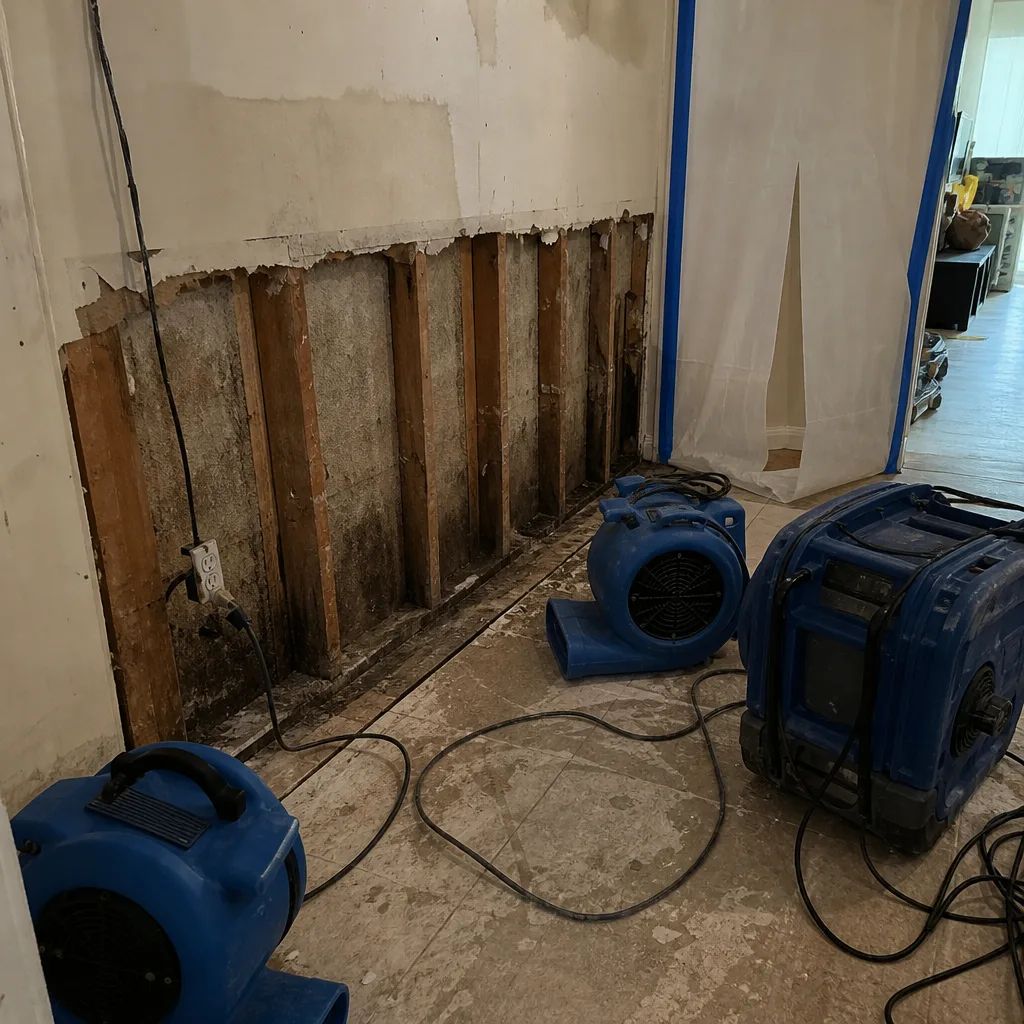 Before
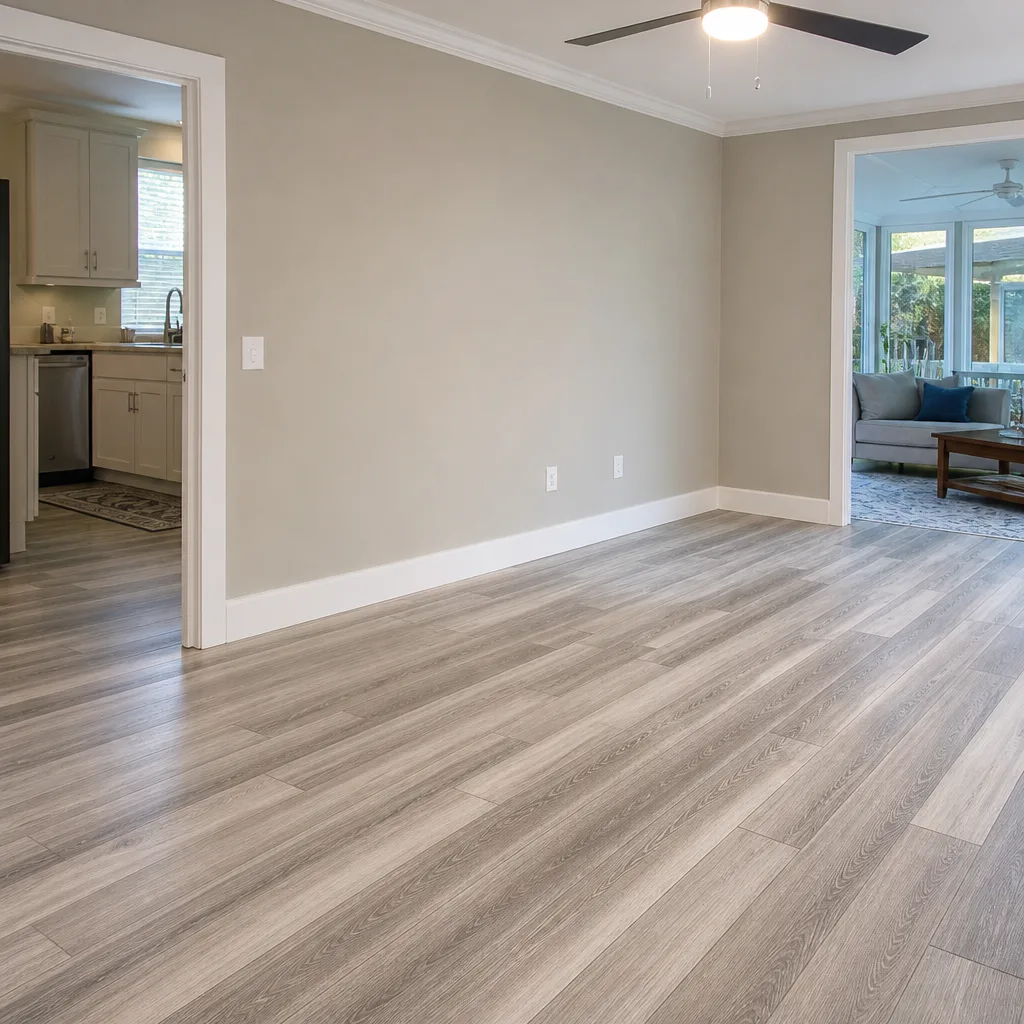 After
After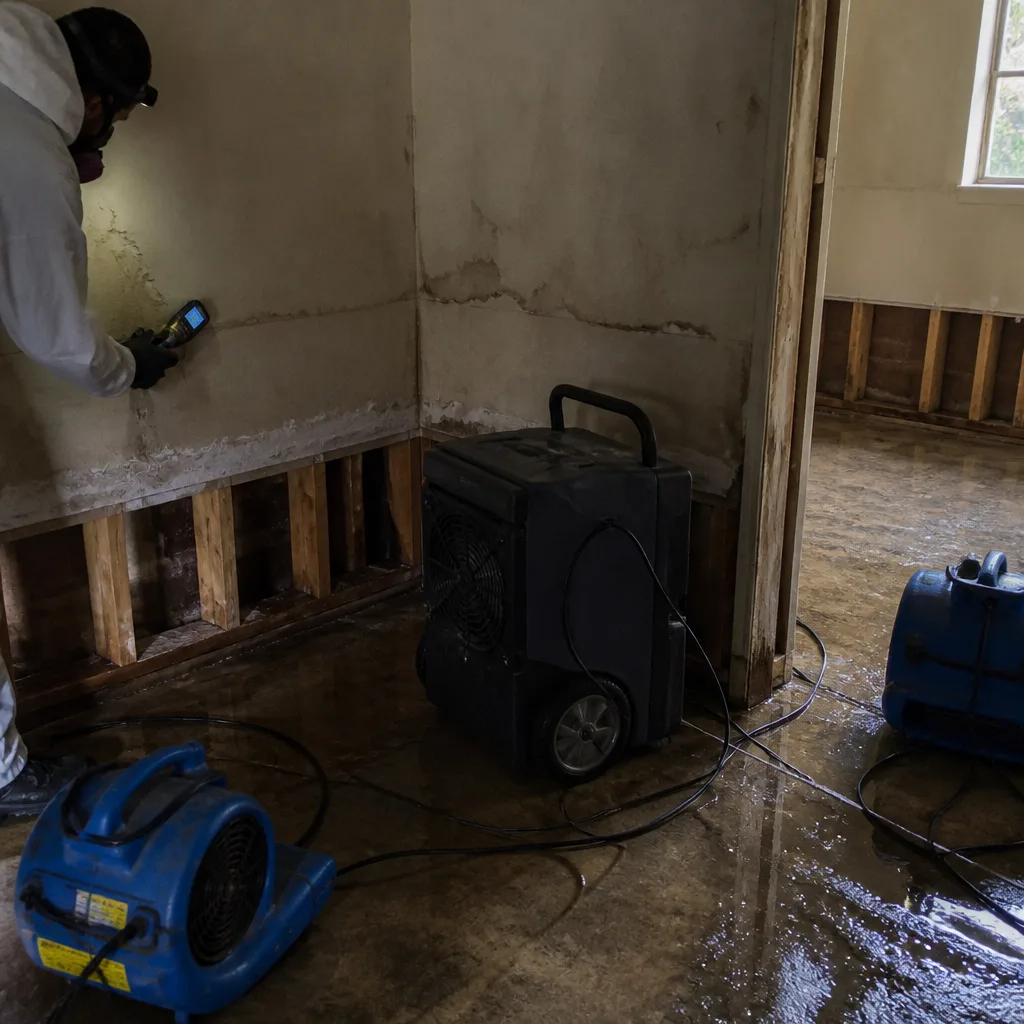 Before
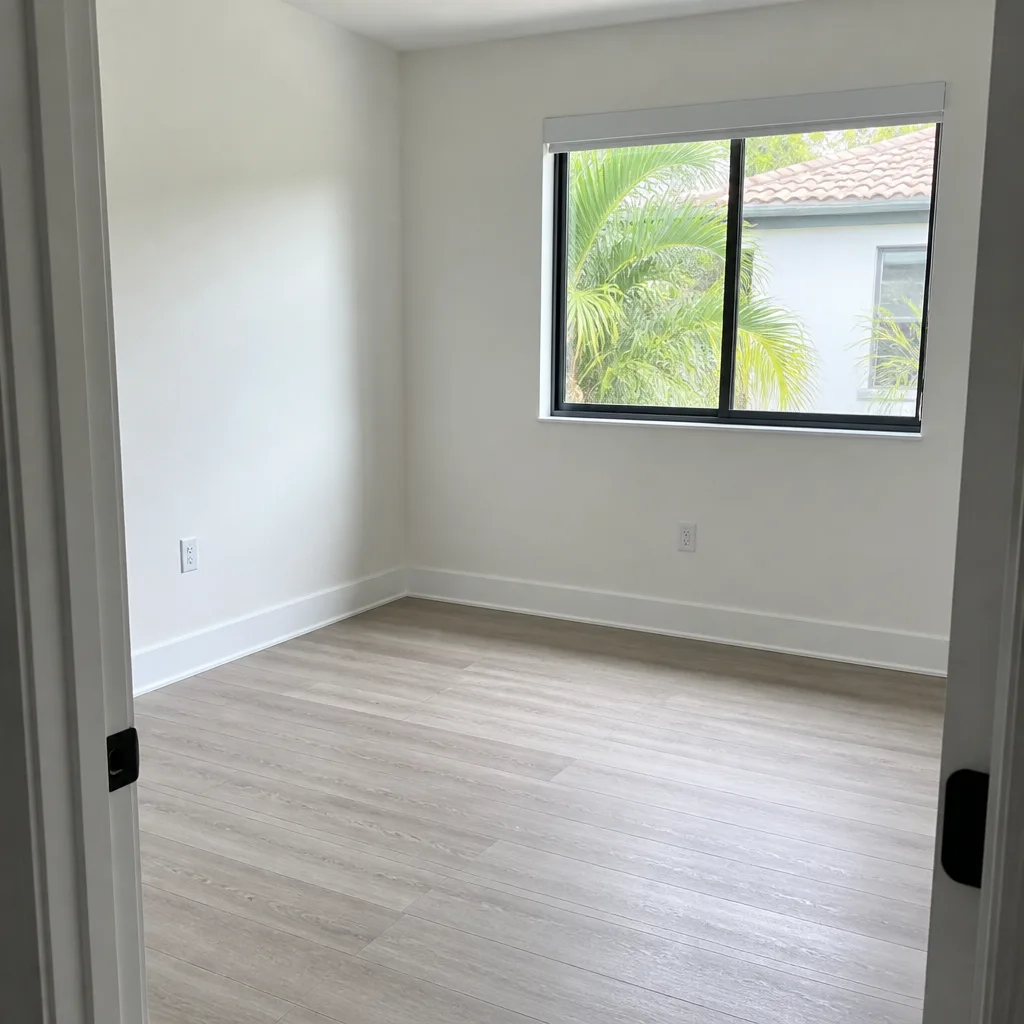 After
After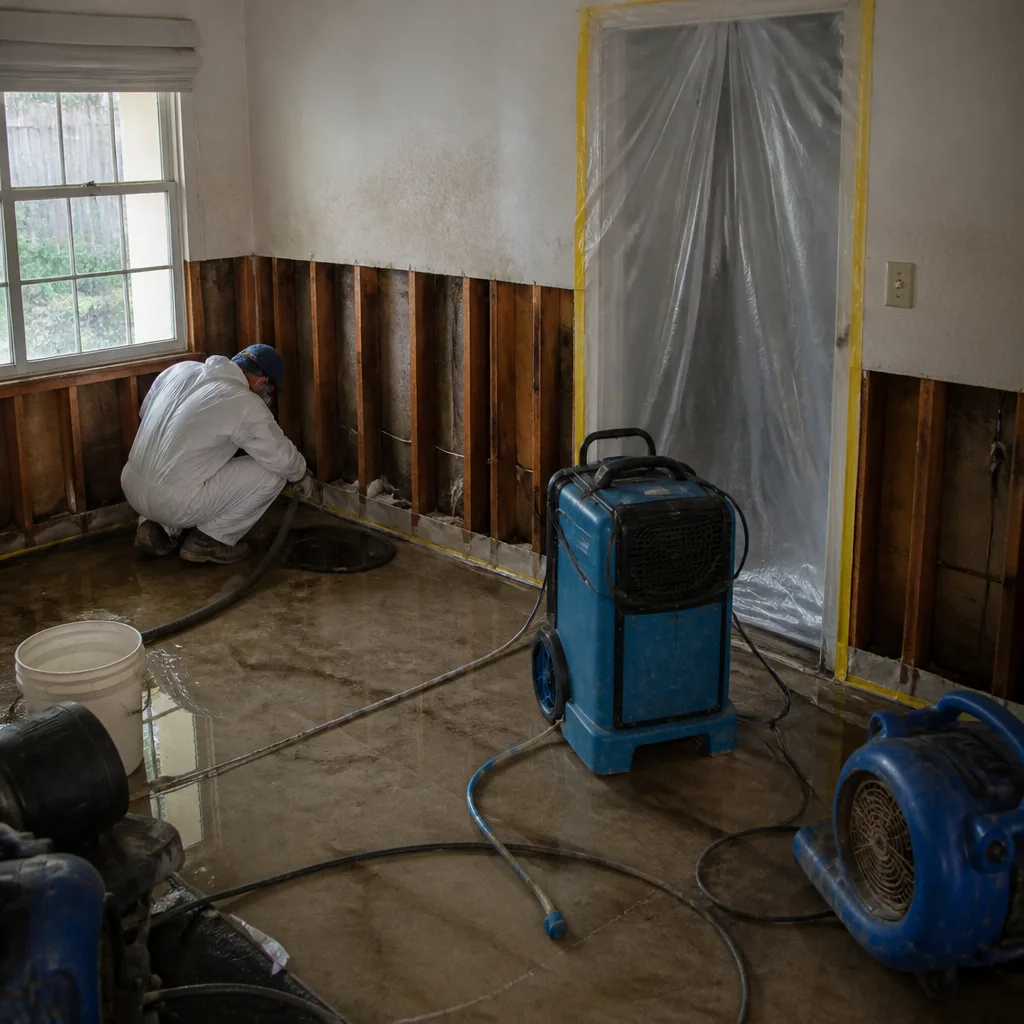 Before
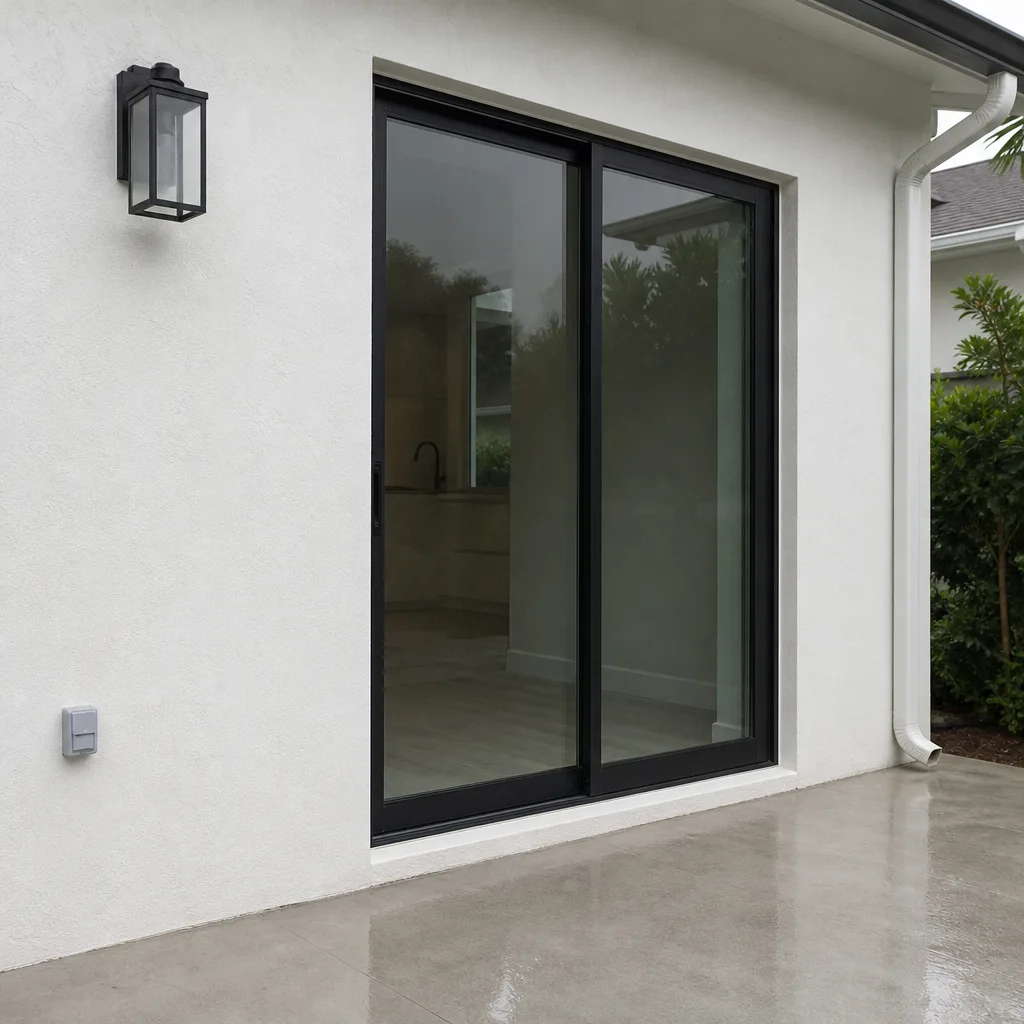 After
After